TECHNICAL GUIDES · B2B BUYER GUIDE
Automotive LED Lighting MOQ: What B2B Buyers Need to Know?
Understand order thresholds, compare sourcing models and negotiate project-specific purchasing terms.
10 min read
Introduction
Automotive LED lighting MOQ affects much more than the number on a purchase order. For distributors, importers, wholesalers and aftermarket brands, minimum quantities shape inventory exposure, cash flow, unit cost and the scope of customization. Buying more can improve production economics while increasing the risk of slow-moving stock.
The right decision balances demand, validated product performance and total purchasing cost. This guide explains how manufacturers set order thresholds, how sourcing models differ and which terms buyers can discuss. There is no single industry MOQ, and negotiation options depend on the specific product, supplier and project.
Automotive LED Lighting MOQ
QUICK GUIDE
Define the counting unit and confirm whether minimums apply per SKU, variant, packaging design or total order.
Compare the actual engineering, branding and procurement scope rather than relying on OEM or ODM labels.
Compare recurring prices, one-time charges, landed costs and inventory exposure at realistic demand levels.
Discuss mixed SKUs, standard packaging, trial batches and scheduled releases, then record agreed conditions.
Approve specifications and samples, verify acceptance criteria and align the purchase order with the final quotation.
1. What Is MOQ in Automotive LED Lighting?
Minimum order quantity (MOQ) is the smallest quantity a supplier agrees to supply under specified commercial and production conditions. It is part of a quotation, rather than a universal number for automotive lighting. Stock availability, product configuration and customization can change the requirement for the same product family.
Clarify the counting unit first: individual bulbs, pairs, complete kits or cartons. An MOQ may apply per model, SKU, housing color, color temperature, packaging design or total purchase order. A total order threshold does not automatically remove minimum quantities for each variant.
For example, two bulb bases may share components but still require separate assembly and inspection batches. Ask the supplier to list the total-order minimum and any variant-specific minimums separately. Record the product revision and packaging specification so purchasing teams compare the same scope.
2. What Determines a Manufacturer’s MOQ?
Component procurement: LED emitters, drivers, housings, seals and connectors may have supplier purchasing minimums or batch sizes. Common components can support smaller orders; dedicated components may require a larger commitment. No particular chip brand or equipment configuration is essential for every manufacturer.
Production setup: Fixture changes, machine preparation, assembly instructions and first-piece approval consume time before saleable units are produced. Electronics may be manufactured internally or by qualified partners. Buyers should evaluate process control and traceability rather than assume every factory owns an SMT line.
Shared platforms: Models using common drivers, cooling structures or housings may share procurement costs. However, base adapters, electrical configurations and optical requirements can still create separate production constraints.
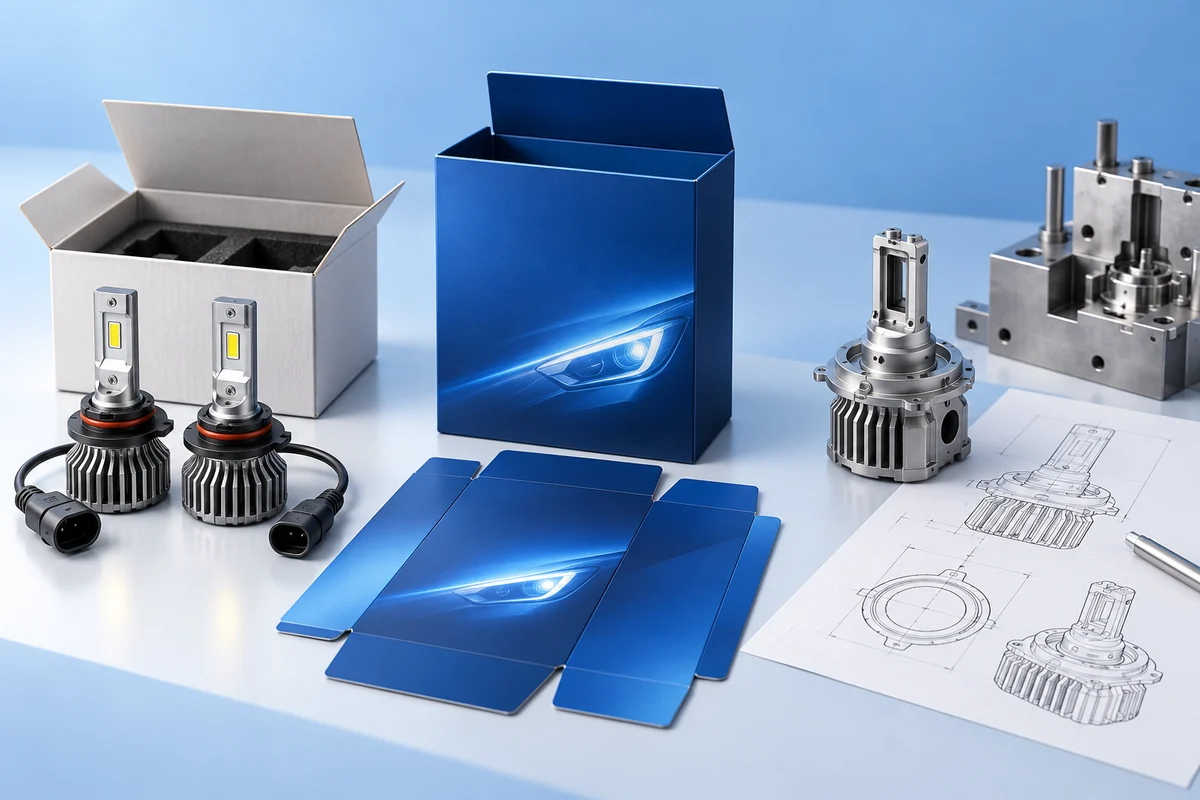
Packaging production: Printed boxes, labels, manuals and carton designs can have minimum runs independent of the lighting product. These depend on materials, printing method and artwork; there is no universal packaging threshold.
Tooling and NRE: New molds, fixtures, engineering and validation create one-time costs. Non-recurring engineering (NRE) charges and repeat-order MOQs should be quoted separately, with ownership and future-use terms defined.
Scheduling and testing: Batch planning, first-article checks, functional inspection and agreed reliability tests also affect production economics. A lower quantity should not silently remove acceptance tests. Agree what is tested, how results are documented and which costs are included.
3. MOQ Differences Between ODM, Private Label and OEM
Standard catalog products usually involve fewer development changes than fully customized designs, but availability and variant selection still matter. Private labeling can introduce separate artwork, marking and packaging requirements even when the product itself stays unchanged.
OEM and ODM labels are used differently between suppliers. Define the engineering scope, design ownership and customization requirements in writing instead of assuming the label establishes a fixed MOQ. The comparison below describes considerations, not industry quantity benchmarks or NVEL policies.
| Sourcing Model | MOQ Considerations | Customization Level | Buyer Considerations |
|---|---|---|---|
| Standard catalog products | Stock and per-model availability; confirm variant minimums | Existing specification | Verify samples, revision and replenishment terms |
| Private label products | Product quantity and packaging or marking minimums may differ | Branding and agreed packaging | Separate printing costs and unused-material responsibilities |
| Modified ODM products | Dedicated components and validation can drive batch requirements | Changes to an existing design | Define modification scope, testing and design rights |
| Fully customized OEM products | Engineering, tooling and dedicated procurement require project review | Project-specific product development | Agree NRE, tooling ownership and repeat-order conditions |
4. How MOQ Affects Unit Price and Total Purchasing Cost
Setup and inspection costs spread across more units can reduce their contribution to the unit price. Component purchase volumes and packaging runs may also influence quotations. The actual price difference depends on the project; a fixed percentage premium for smaller orders would be misleading.
Compare total purchasing cost, not just the invoice price per set. A larger order may reduce some production costs while increasing inventory holding, financing, storage and obsolescence exposure. Slow-selling variants can tie up working capital longer than a higher-priced trial batch.
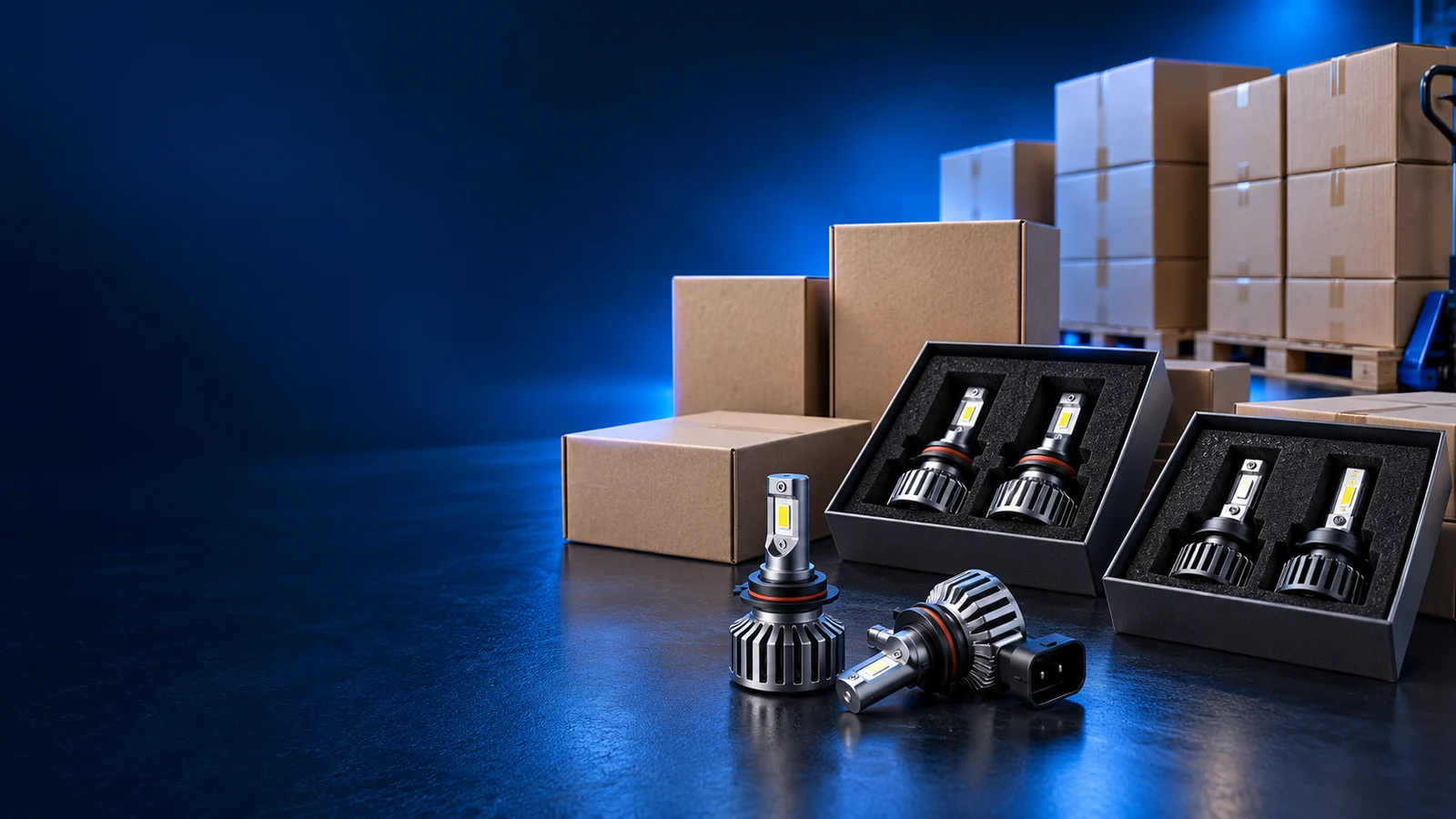
Estimate landed cost using the agreed trade terms, freight, insurance, import duties and other applicable handling costs. Shipping efficiency depends on carton dimensions, weight, route and transport mode. Larger shipments can improve utilization, but savings should be confirmed with actual freight quotations.
Ask for comparable tiered quotations with identical specifications, quality requirements and packaging. Separate one-time costs from recurring unit prices. Calculate the cash commitment, expected sales period and reorder timing at each tier before choosing the lowest apparent unit price.
5. Practical MOQ Negotiation Strategies
Mixed-SKU ordering: Ask whether an order can combine bulb bases or related models. Provide a quantity split and identify shared components. The supplier may still require minimum batches per SKU; mixed ordering is an option to discuss, not an entitlement.
Shared-platform products: Consider existing designs with common components before requesting exclusive electronics or optics. Confirm that the selected standard platform meets fitment and performance requirements; reducing customization should not compromise the application.
Trial orders: Explain the market test, evaluation criteria and expected next step. Ask for a trial-batch quotation, including any setup costs and limitations. A supplier may accept, counteroffer or decline depending on available stock and production constraints.
Standard packaging: Request neutral packaging or an agreed label option if custom printing creates a separate threshold. Compare branding, labeling and protection requirements before accepting the alternative.
Phased purchase orders: Discuss scheduled releases against an agreed commitment. Define deposits, delivery windows, component allocation, storage charges, ownership and cancellation liability. Do not assume unused printed packaging will be stored free of charge.
Volume forecasts: Share realistic demand estimates and distinguish forecasts from binding orders. Reliable visibility may help planning, but a forecast alone does not guarantee lower MOQ or pricing.
Tiered quotations and supply agreements: Request pricing for feasible quantity levels and discuss repeat-order arrangements. Document validity, specification changes and review conditions. Seasonal capacity is a topic to ask about, not a predictable discount rule.

6. Questions to Ask Before Accepting an MOQ
Use these questions in the quotation request and ask for written answers. Resolve product and packaging thresholds before approving artwork or paying development charges.
- Is the MOQ calculated per SKU, per variant or across the total order, and is the unit a bulb, pair or kit?
- Can different bulb bases or related models be combined, and what minimum quantity remains for each model?
- Do different color temperatures or housing finishes have separate production minimums?
- Does customized packaging have its own minimum, setup charge or unused-material liability?
- Are there one-time tooling or development fees, and who owns and may reuse the tooling?
- How does a smaller batch affect production scheduling, sample approval and the quoted lead time?
- Are tiered prices available for the same specification, and how long is each quotation valid?
- What happens if an order is changed or cancelled after component purchasing, packaging printing or production starts?
7. Automotive LED Lighting MOQ Buyer Checklist
Use this checklist before issuing a purchase order. Keep the approved specification, sample records and commercial terms together so the sales, engineering and purchasing teams share the same baseline.
- Confirm the exact model, revision, base type, color temperature and kit contents for every SKU.
- Obtain written product, variant and packaging minimums with the counting unit clearly defined.
- Approve samples against fitment, optical, electrical and thermal acceptance criteria before scaling.
- Confirm target-market requirements and the evidence needed for the specific product and use.
- Separate tooling, NRE, packaging setup and testing fees from recurring product prices.
- Compare realistic quantity tiers using landed cost, cash commitment and expected sell-through.
- Confirm any mixed-SKU or phased-release arrangement, including responsibilities and charges.
- Agree production milestones, inspection records, delivery terms and change-notification procedures.
- Record payment, cancellation, warranty and nonconforming-product handling terms in the agreement.
- Check that the purchase order matches the final quotation, approved sample and packaging artwork.
8. How to Discuss MOQ Requirements With NVEL
NVEL is an automotive LED lighting manufacturer with more than 25 years of automotive lighting manufacturing experience and ISO 9001 and IATF 16949 certificates. For procurement review, request the current certificates and check their stated scope. Management-system certification does not establish a product’s road-use approval or an MOQ policy.
For OEM/ODM discussions, send product models or reference specifications, quantities per SKU, estimated repeat demand, target markets, vehicle applications, customization requirements and packaging needs. Explain whether the request is for engineering samples, a trial batch or recurring bulk supply.
NVEL’s team can review the requirements and provide a project quotation describing the applicable quantity conditions, development scope and commercial terms. Mixed-SKU acceptance, packaging arrangements, sample charges, pricing and delivery schedules require project-specific agreement; this guide does not promise any particular concession.
Explore the automotive lighting solutions page for the cooperation scope, then submit a clear request through the contact page. A complete brief helps identify which requirements drive the order threshold and which alternatives merit evaluation.
Frequently Asked Questions
What is a typical MOQ for automotive LED lighting?
There is no universal quantity. Stock status, components, production setup, variants, packaging and engineering scope all influence the requirement. Ask for a quotation for the exact specification and distinguish total-order minimums from SKU-specific thresholds.
Is a sample order subject to the same MOQ as a bulk order?
Sample supply usually follows a separate quotation and availability review. Confirm sample quantity, configuration, charges and delivery conditions directly. Samples support evaluation; they do not guarantee production availability, bulk pricing or sample-fee credits.
Is OEM MOQ always higher than ODM MOQ?
Not always. Extensive dedicated engineering and tooling can require greater commitments, but terminology varies. An ODM modification using special components can also create significant minimums. Compare the actual development and procurement scope rather than the label alone.
Can different LED bulb models be mixed in one order?
Possibly, if the supplier agrees. Shared components may make a combined order more practical, but each base type, electrical version or color temperature can have a separate batch minimum. Obtain written approval of the proposed quantity split.
Does private label packaging have a separate MOQ?
It can. Box printing, manuals and labeling may have minimum runs different from the lighting products. Ask about standard packaging alternatives and the cost, ownership and handling of unused materials. No fixed printing quantity applies to every project.
Will a larger order always produce the lowest total cost?
No. A lower unit quotation can be offset by financing, storage, slow sales or specification changes. Compare landed cost and inventory exposure at realistic demand levels. Keep product and quality requirements identical when evaluating price tiers.
How should a buyer negotiate MOQ?
Present a specific quantity split, market-test plan and credible demand forecast. Discuss standard platforms, trial batches, packaging options and phased releases. Ask for alternative quotations and document accepted terms; suppliers are not required to accept any proposed arrangement.
Conclusion
The best automotive LED lighting MOQ is a commercially workable quantity for a validated product, realistic demand and an agreed supply plan. Compare the full specification, quality requirements, one-time charges, landed cost and inventory exposure before accepting an order threshold.
Use negotiation to explore feasible alternatives and document every accepted condition. Review NVEL’s automotive LED lighting product catalog and Technical Guides, then share your model list, quantities and customization brief to request a project quotation.
Discuss Your Automotive Lighting Purchase Plan
Send NVEL your product models, quantities per SKU, target markets, customization requirements and packaging needs. Request a project-specific quotation and confirm the applicable purchasing terms before ordering.