TECHNICAL GUIDES · B2B SOURCING
How to Choose an Automotive LED Lighting Manufacturer?
A practical B2B sourcing guide to manufacturing capability, engineering, quality control and dependable supply.
B2B Supplier Evaluation · 11 min read
Choosing an automotive LED lighting manufacturer is a sourcing decision that affects product consistency, installation performance and long-term customer support. A low quotation can become expensive if repeat batches vary, compatibility claims are unclear or compliance evidence does not match the product you receive.
For distributors, importers, wholesalers, aftermarket brands, OEM/ODM purchasing teams and professional retrofit businesses, the goal is to qualify a supplier against the intended application and market. Start with a clear specification, verify manufacturing and engineering evidence, and approve samples before committing to volume. This guide provides a practical framework for that process.
Supplier Evaluation Priorities
QUICK GUIDE
B2B Supplier Evaluation Checklist
Use this checklist to shortlist suppliers and identify gaps that need evidence. Evaluate each item against your product and market; the same machine, test regime or certificate is not appropriate for every lighting application.
| Evaluation Criteria | Warning Signs | What to Verify |
|---|---|---|
| Manufacturing capability | Unclear factory identity or outsourced processes | Production flow, key operations, subcontractor control and delivery records |
| Optical and thermal engineering | Only chip lumens or unmatched beam photographs | Complete-lamp measurements, beam distribution and stabilized thermal results |
| Quality control | Generic procedures without batch evidence | IQC/IPQC/FQC/OQC records, traceability and relevant reliability validation |
| Electrical compatibility | Claims of universal CANBus compatibility | Vehicle-specific tests, driver protection, EMC and physical fitment |
| OEM/ODM support | Branding presented as full engineering development | Modification scope, prototypes, MOQ, tooling and sample approval |
| Certifications and compliance | Certificates unrelated to the entity or model | Current management certificates and applicable model-specific compliance evidence |
| Warranty and after-sales support | Vague claims without a handling procedure | Written terms, defect investigation, replacements and supply continuity |
1. Evaluate Manufacturing Capability
Ask the supplier to explain how the quoted product is made, from component purchasing through assembly, testing and shipment. A factory visit, live production review or independent audit should connect the company identity with the actual production site and the models you intend to buy.
Identify which key processes are performed internally and which are outsourced. Request evidence of supplier approval, incoming inspection and control of subcontracted work. Automated SMT, clean rooms and particular machines are relevant to some designs; they are not universal requirements for every automotive lighting manufacturer.
Review realistic batch sizes, bottlenecks, material availability and recent delivery records. Ask how production is scheduled when demand increases or a component becomes unavailable. For repeat orders, agree on revision control and advance notification of changes. A convincing equipment list is less useful than a documented process that consistently produces your approved specification.
2. Verify Optical and Thermal Engineering
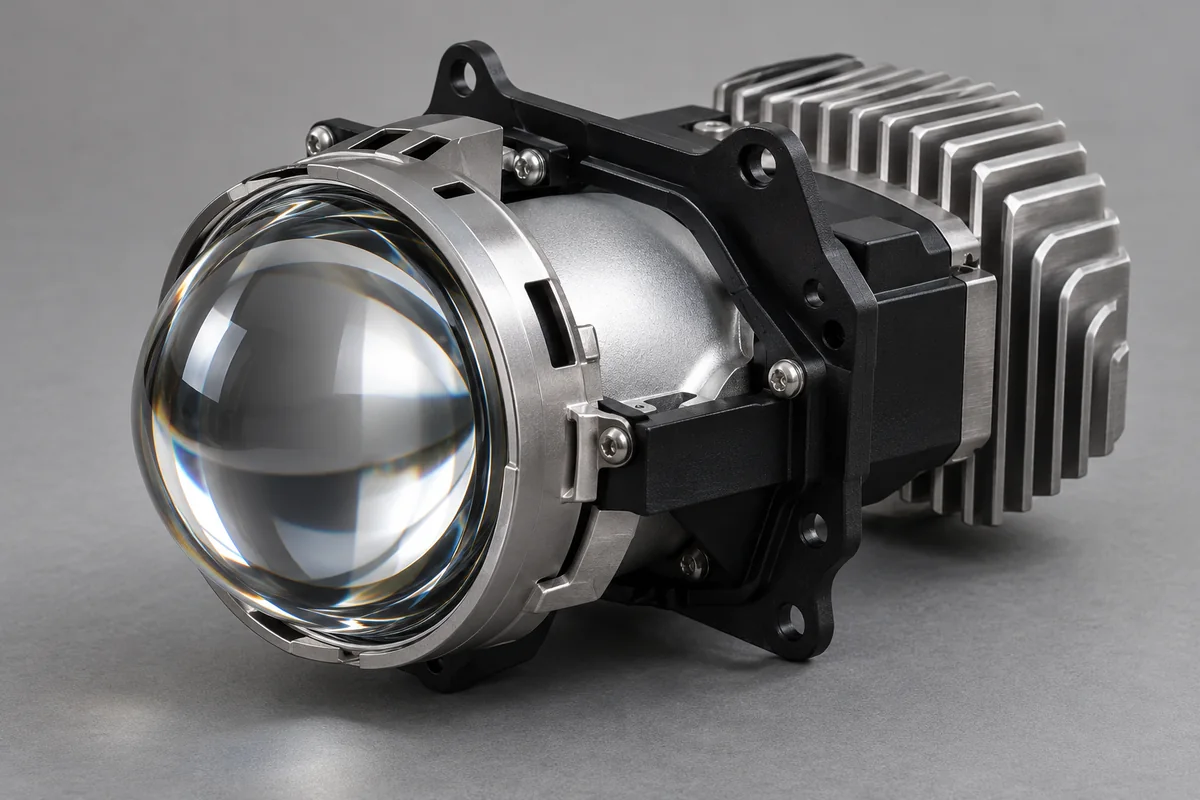
Compare measured complete-lamp performance rather than adding up LED chip specifications. Chip-level theoretical lumens do not account for optical losses, operating current or temperature. Request actual luminous flux after stabilization, together with voltage, ambient temperature and the measurement method.
For headlights and fog lights, examine luminous intensity distribution, beam shape, cutoff behavior where applicable, and glare control. A bright central spot or attractive wall photograph cannot establish whether the whole beam meets the application. Ask for photometric data tied to the exact model and test setup.
Thermal evaluation should show how output and component temperatures change during sustained operation. Review heat-sink design, airflow needs, fan behavior where fitted, and thermal derating. Test inside the intended housing or installation environment; an open-bench result may not represent a sealed headlamp. Record acceptable stabilized output and temperatures before sample approval.
3. Review Quality Control and Reliability Testing
Ask how incoming quality control (IQC), in-process quality control (IPQC), final quality control (FQC) and outgoing quality control (OQC) work for the proposed product. Verify inspection points, acceptance limits, responsibilities and the records used to release a batch.
Batch traceability should connect finished products with material lots, production dates and relevant inspection results. Ask the supplier to demonstrate how it would investigate a field defect, identify affected batches and prevent recurrence. A procedure document without usable records offers limited reassurance.
Reliability testing should reflect the operating environment and failure risks. Review aging, vibration, temperature cycling and water-ingress validation where relevant. Confirm sample size, duration, operating state, pass criteria and whether testing is for design validation, periodic checks or routine production. Do not assume every unit needs a universal two-to-four-hour burn-in or individual IP67/IP68 immersion test. An IP claim must match the tested enclosure and conditions.
4. Check Electrical Engineering and Vehicle Compatibility
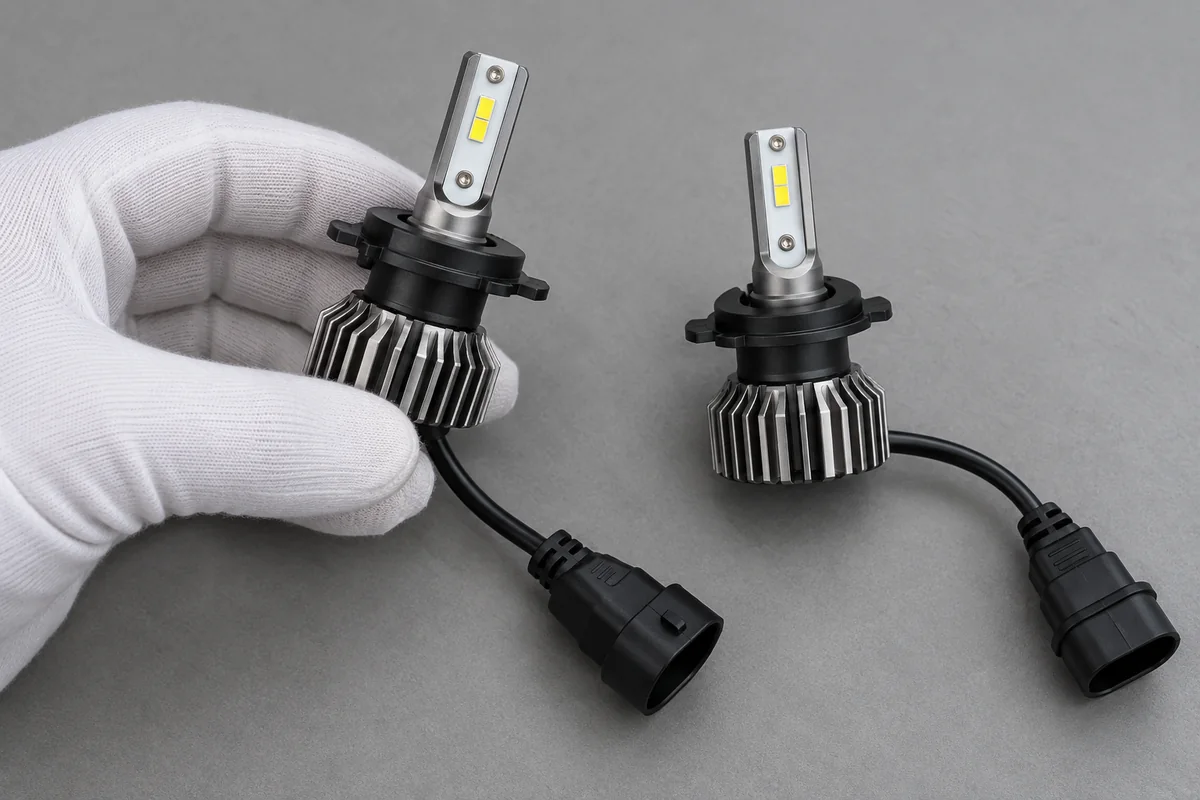
A bulb that lights on a bench may behave differently in a vehicle. Body control modules (BCMs) can monitor lamp loads or use pulse-width modulation (PWM), creating flicker, startup issues or dashboard warnings with some replacements. Request compatibility evidence for the vehicle, model year, trim and original lighting system.
“CANBus compatible” is not a guarantee for all vehicles. Ask what the driver or adapter actually does, which applications were tested and which limitations remain. If external load resistors are proposed, review their heat generation, mounting position and effect on the installation.
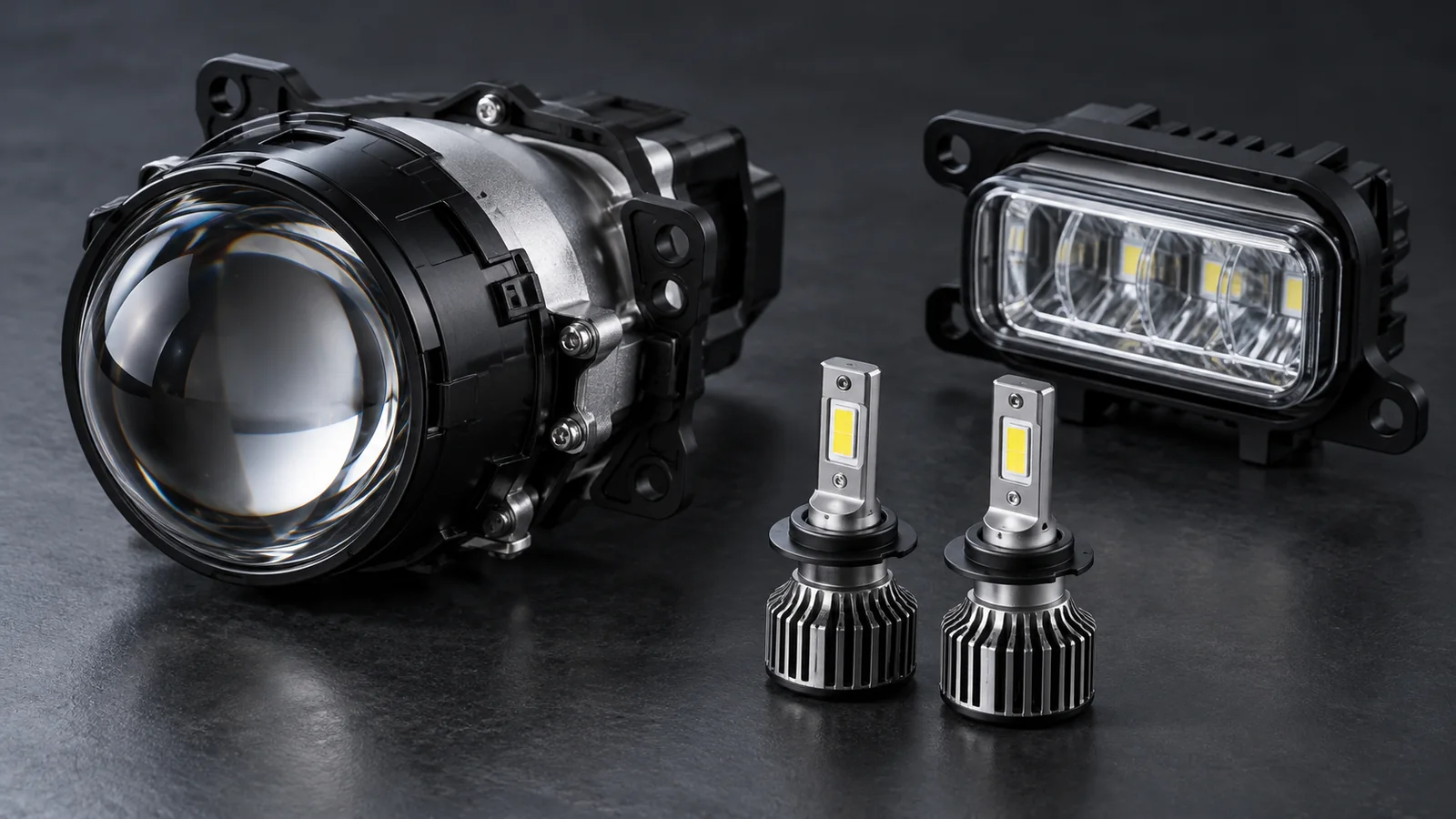
Review electromagnetic compatibility and interference (EMC/EMI), input-voltage limits, relevant transient protection and thermal protection. Confirm connector polarity, driver packaging, bulb-base dimensions, rear-cap clearance and secure mounting. Test startup, dimming where applicable, repeated switching and other vehicle functions. Keep a fitment matrix linked to the product revision rather than treating a connector match as complete compatibility.
5. Assess OEM/ODM and Private Label Support
Define the cooperation model before comparing quotations. In an OEM project, the supplier manufactures to agreed customer specifications or designs. ODM generally involves a supplier-developed design that is adapted for the customer. Private labeling may only change branding and packaging, with little engineering modification.
List the requested changes: product markings, packaging, connectors, optical performance, mechanical dimensions or thermal design. Ask which changes are feasible, how they affect validation, and who owns the resulting drawings and tooling. Branding support alone does not prove optical or mechanical development capability.
Agree on minimum order quantity (MOQ), development charges, tooling terms, prototype stages and sample approval. Define measurable acceptance criteria and retain an approved reference sample. For mass production, require controlled specifications and approval of material or design substitutions. Confirm packaging artwork, labels and inspection requirements before the first production order, then compare the initial batch with the approved sample.
6. Verify Certifications and Market Compliance
Separate management-system certification from product compliance. ISO 9001 concerns quality management systems. IATF 16949 adds automotive-sector quality management requirements and is used with ISO 9001. Neither certificate establishes that every lamp is approved for road use.
For each certificate, check the formal standard name, certificate holder, manufacturing site, validity and scope against the supplying entity and your project. NVEL holds ISO 9001 and IATF 16949 certifications. Request the current certificate copies when qualifying NVEL for a sourcing program; certificate numbers, dates and scope are not specified in this guide.
In the United States, FMVSS No. 108 sets requirements for covered vehicle lighting equipment. Applicable DOT markings indicate manufacturer certification, not a blanket government approval. Under UNECE systems, relevant E-mark type approvals relate to specific products, regulations and market applications. Check the approval document against the exact model and intended function.
CE, RoHS and FCC obligations depend on product category, use and destination market. Do not treat these marks as interchangeable with road-lighting approval. Verify which rules apply before ordering; an off-road designation, management certificate or generic test report does not establish permission for public-road use.
7. Evaluate Communication, Warranty and Long-Term Supply
Assess whether the supplier answers technical questions with clear specifications and evidence. A useful response identifies what is confirmed, what still needs testing and who can resolve engineering questions. Request controlled datasheets, drawings, installation guidance and change notices.
Warranty discussions should cover the starting point, exclusions, evidence required for a claim, defect investigation, replacement procedures and responsibility for related freight. Agree on a practical process for handling failures in your market. Do not assume a headline warranty statement defines every commercial obligation.
Confirm sample and production lead times, reorder planning and component-change procedures. Ask how discontinued parts, replacement stock and revisions will be handled. Long-term supply depends on maintaining the approved product specification as well as shipping on time. Include the agreed documentation, inspection criteria and defect-handling terms in the purchase arrangement.
8. Request Documents Before Selecting a Supplier
Build a qualification file before negotiating the final order. Request documents for the exact supplier and product rather than accepting a mixed folder of unrelated certificates. Record the revision and date of each item.
Check that quotations name the same model and revision as the specification sheet, sample and test report. Resolve missing information before approval. Where confidentiality limits disclosure, agree on an appropriate review method instead of assuming unavailable evidence is satisfactory.
- Company and factory information, including the supplying entity and production site
- Current ISO 9001 / IATF 16949 certificates with holder, scope and validity
- Relevant product test reports tied to the quoted model
- Product specification sheets and dimensioned drawings
- Quality inspection procedures and examples of batch records
- OEM/ODM capabilities, development responsibilities and change controls
- Sample quotation, MOQ, tooling charges and estimated lead times
- Written warranty and after-sales terms, including defect handling
9. Evaluate Samples Before Bulk Ordering
Prepare a written sample plan covering the target application, supply voltage, mounting arrangement, ambient conditions and acceptance limits. Evaluate beam distribution, glare, stabilized output, thermal behavior, electrical compatibility and installation dimensions. Record test distance, aiming, stabilization time and instruments so comparisons are repeatable.
Use representative vehicle or housing tests alongside bench measurements. Check cooling space, rear covers, connectors and service access. Examine packaging and instructions as part of the supplied kit. Compare multiple samples where practical to identify variation; one good demonstration unit does not establish batch consistency.
Close the approval process with documented results, a retained reference sample and an agreed specification. For the initial order, define pre-shipment inspection and any pilot-batch checks. Revalidate changes affecting optics, electronics, materials or fitment. Agree on how later batches will be compared with the approved baseline before committing to repeat volume purchases.
10. Why Consider NVEL as Your Manufacturing Partner?
NVEL brings 25+ years of automotive lighting manufacturing experience to automotive LED lighting product development and manufacturing. Its ISO 9001 and IATF 16949 certifications support a discussion focused on quality management, controlled production and manufacturing consistency.
For distributors, importers, wholesalers and aftermarket brands, NVEL offers a starting point for evaluating product supply and OEM/ODM cooperation. Share your target market, application, performance requirements, quantities and customization needs so the proposed product and project scope can be reviewed.
Apply the same qualification process you would use for any manufacturing partner: review current documents, confirm model-specific compliance, evaluate samples and agree on commercial terms. Explore the NVEL automotive LED lighting product catalog to identify candidates, then request the technical information needed for your sourcing decision.
Frequently Asked Questions
How can I verify an automotive LED lighting manufacturer?
Match the company identity to the production site, review its manufacturing and outsourced processes, examine inspection records and verify certificates. Use a factory review or independent audit where appropriate, then approve samples against written requirements.
What is the difference between ISO 9001 and IATF 16949?
ISO 9001 specifies general quality management system requirements. IATF 16949 adds automotive-sector requirements and is implemented with ISO 9001. Both concern management systems; neither is a substitute for model-specific lighting approval.
What testing reports should I request?
Request relevant photometric, thermal, electrical, EMC and environmental reports for the exact model. Check test conditions, sample identification, dates and acceptance criteria. The necessary evidence depends on the application and destination market.
Can an LED lighting manufacturer provide OEM/ODM services?
Some can, but capabilities differ. Confirm whether the offer covers engineering changes, supplier-developed designs or branding only. Agree on prototypes, validation, MOQ, tooling ownership and production consistency before committing.
How can I evaluate LED headlight samples?
Compare the beam in the intended optical system, sustained output, temperatures, electrical behavior and physical fitment. Use consistent test conditions and representative vehicle checks, then retain the approved sample and specification.
Are all automotive LED replacement bulbs road legal?
No. Road legality depends on the jurisdiction, exact product, intended function and installation. A bulb-base match, CE mark or quality management certificate does not establish road-use compliance. Confirm applicable approvals and rules for the specific application.
What should I confirm before placing a bulk order?
Confirm the approved model and revision, quantities, MOQ, price, lead time, packaging, inspection criteria, relevant compliance documents and warranty procedures. Define how substitutions, defects and later product changes will be handled.
Conclusion
Choose a manufacturing partner by comparing evidence, not just prices. Verify the production process, complete-lamp engineering, inspection controls, vehicle compatibility, customization scope and market-specific compliance. Review documents, approve samples and define how repeat batches and defects will be managed.
A clear qualification process helps purchasing and engineering teams make the same decision from the same specification. Browse our automotive lighting technical guides for additional application knowledge, then discuss your product and sourcing requirements with NVEL.
Ready to Discuss Your Automotive Lighting Sourcing Project?
Share your target market, application, technical requirements and purchasing plan. Contact NVEL to discuss product options, sample evaluation and OEM/ODM cooperation.