TECHNICAL GUIDES · B2B SOURCING
Private Label Automotive LED Lighting: A Guide for Distributors and Brands
Plan branding, packaging, supplier approval and a controlled private-label product launch.
Updated October 21, 2026 · 11 min read
Introduction
Private label automotive LED lighting gives distributors, brands, wholesalers and importers a way to build a recognizable product range using a manufacturing partner. The approach can cover branding and packaging on an existing product, or extend into appearance, specifications and engineering changes. Each choice creates different costs, validation needs and purchasing responsibilities.
This guide explains the commercial benefits, four customization levels, supplier evaluation, MOQ planning and a five-step launch process. Start with a defined market and application, then approve the actual product and written terms. Private labeling is a business strategy, not a guarantee of profitability, exclusivity or road legality.
Private Label Automotive LED Lighting
QUICK GUIDE
Define a branded offer around verified applications and dependable dealer support.
Agree the exact scope of product marking, packaging and any engineering changes.
Approve representative samples, traceability records and written acceptance criteria.
Separate product and packaging quantities, one-time charges and inventory exposure.
Control samples, artwork, pilot production, inspection and reorder revisions.
Why Private Label Automotive LED Lighting?
Brand differentiation: coordinated product names, packaging and application information help buyers understand your range. Differentiation may also come from a carefully selected specification, verified fitment coverage or installer support. Branding alone does not make an otherwise shared factory platform technically unique.
Product presentation and consistency: approved artwork, accurate specifications and controlled instructions give dealers a repeatable sales experience. Maintain the same product revision across your catalog, packaging and online listings. Inconsistent power claims, missing installation notes or unapproved substitutions can undermine that consistency.
Customer recognition: identifiable packaging and product references can help customers find the correct replacement or reorder. Recognition is useful, but higher repeat purchasing is not guaranteed. Product reliability, availability, complaint handling and the actual customer experience still determine whether buyers return.
Pricing flexibility and distributor relationships: a defined branded offer gives you more control over positioning, bundles and channel support. It does not guarantee higher margins or eliminate price comparison. Include warranty costs, marketing, logistics and dealer expectations when setting prices. Regional exclusivity requires a separate written agreement defining territory, products, channels, duration and conditions; it is not an automatic private-label right.
Private Label Customization Options
Use four levels to define the work you want quoted. These are planning categories, not standardized industry packages or NVEL MOQ commitments. Ask the supplier to identify which changes are available for the selected model, how they affect validation, and which one-time charges apply.
Product branding may include an approved logo or identifying label, subject to the product material and available process. Confirm placement, durability, size and legibility using a physical sample. Do not cover required markings, traceability codes or safety information. A proposed marking method must be confirmed by the manufacturer.
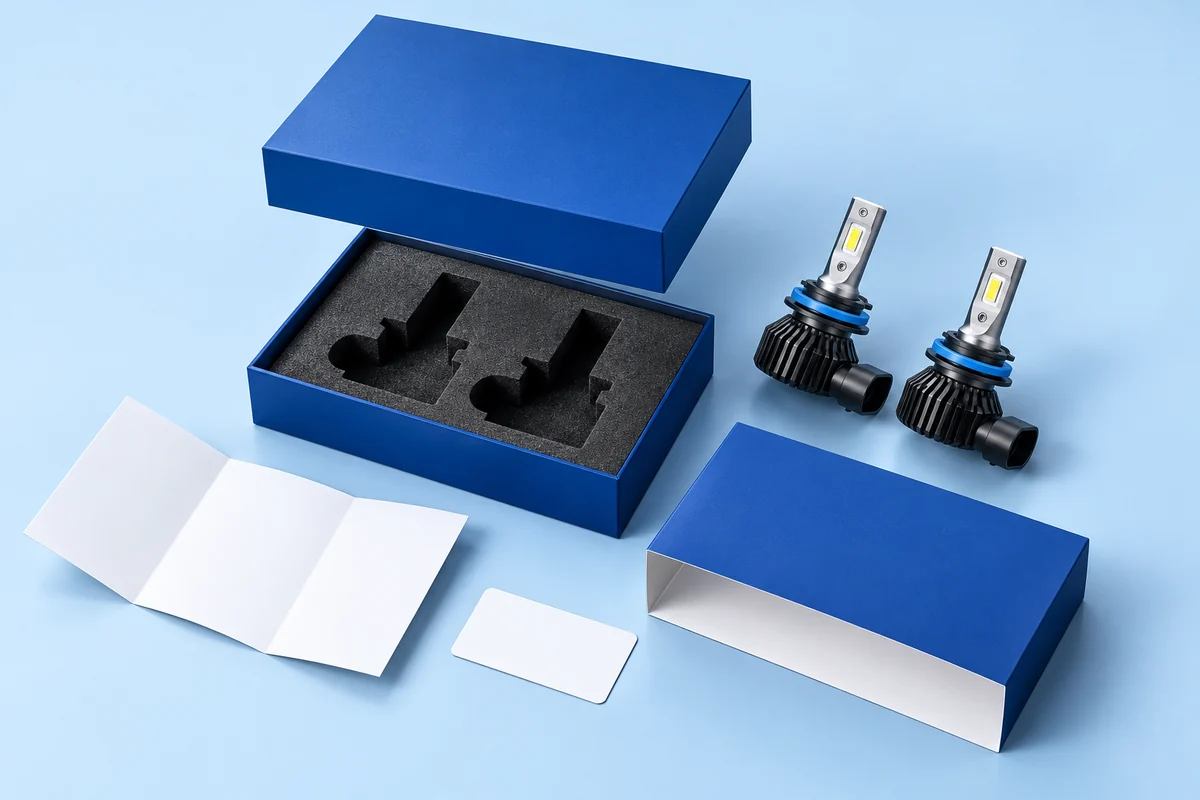
Custom retail packaging can involve branded boxes, protective inserts, instructions and model labels. Approve dimensions, print proofs, barcode data and contents together. Make sure the packaging protects the actual product and accessories during distribution. Design assistance, printing quantities and artwork ownership should be specified in the quotation.
Appearance and specification customization may change finishes, connectors, cable lengths or selected performance targets. These changes can affect fitment, sealing, heat dissipation and electrical behavior. A different color temperature or drive current should not be treated as a purely cosmetic change.
Engineering-level customization can involve optical structures, housings, driver circuits or control behavior. Budget for prototypes, tooling, renewed testing and compliance assessment where required. Define the approved bill of materials, revision and change-control process. Existing reports may not cover a modified design; confirm their applicability before ordering.
| Customization Level | Typical Changes | Main Cost Factors | Best-Suited Buyers |
|---|---|---|---|
| Product Branding | Logo or identifying labels | Marking setup, process and quantity | Distributors building a branded range |
| Custom Retail Packaging | Printed boxes, inserts and instructions | Artwork, print setup, materials and batch sizes | Brands and wholesalers with retail channels |
| Appearance and Specification Customization | Finishes, connectors or selected specifications | Parts, setup and renewed validation | Buyers with defined application requirements |
| Engineering-Level Customization | Optics, housing or driver changes | Engineering, prototypes, tooling and compliance work | Brands seeking dedicated development |
For the design and ownership implications behind these choices, see OEM vs. ODM Automotive Lighting.
How to Choose a Private Label Lighting Manufacturer
Evaluate the supplier against your intended product range and target markets. A polished catalog or attractive sample does not establish repeatable production capability. Request evidence tied to the supplying entity, factory location and exact product configuration, then resolve missing information before committing to branded inventory.
Manufacturing capability: ask which operations are performed in-house and which are subcontracted. Review relevant assembly controls, capacity planning, critical component sourcing and change management. Automated SMT lines, cleanroom facilities and in-house photometric laboratories are capabilities to verify when relevant, not assumptions about every supplier or claims about NVEL.
Product quality consistency: define measurable acceptance criteria for dimensions, connectors, appearance, optical output and electrical behavior. Review sustained performance and representative installation conditions rather than relying only on peak lumen claims. Confirm how component substitutions are approved and whether production samples match the accepted specification.
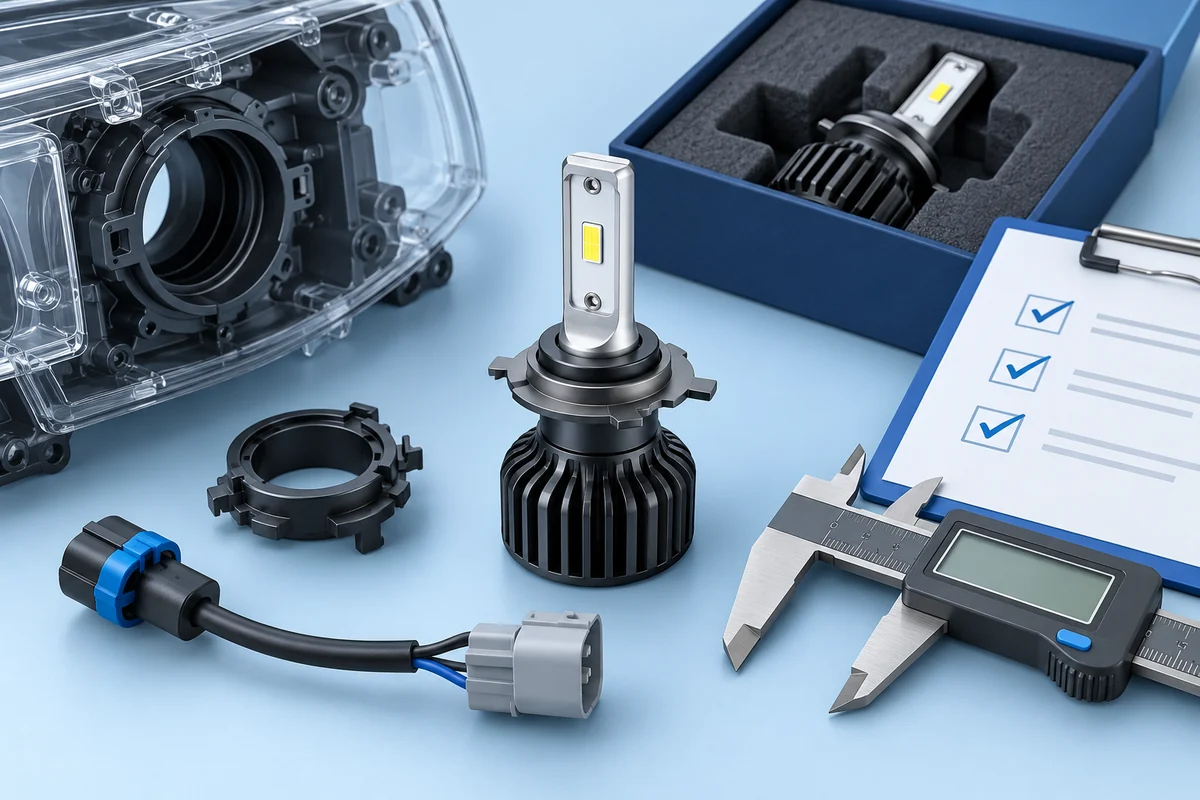
Sample evaluation: test mounting clearance, sealing, thermal behavior, beam distribution and operation on representative vehicles. Assess flicker, diagnostic warnings and interference where relevant. A successful test on one vehicle does not establish universal compatibility. Keep a documented reference sample and record the tested hardware and firmware revision.
Traceability and inspection: request lot identification, inspection records and a defined response to nonconforming products. Agree sampling, critical defect rules and any required functional checks. Burn-in testing, its conditions and coverage must be agreed for the project; do not assume that every product receives 100% aging.
Documentation availability: check specifications, drawings, installation instructions and relevant test or approval documents. Verify model references, revisions, test conditions and the issuing organization. Claims such as IP68 or EMC performance need appropriate evidence for the actual configuration. Ask whether testing is internal or performed by an external laboratory.
Branding protection and support: agree permitted trademark use, artwork access, confidentiality, handling of overruns and disposal of leftover branded stock. An NDA does not automatically grant design ownership or exclusivity. Confirm communication responsibilities, warranty terms, complaint investigation and spare-product support so your dealers know what service they can offer.
Use our automotive lighting supplier evaluation guide to organize qualification evidence before a bulk order.
MOQ, Packaging Costs and Inventory Planning
Minimum order quantity is configuration-specific. The product model, branding method, print requirements, material procurement, tooling, setup, order mix and production schedule all affect the quotation. Ask for separate product and packaging requirements rather than treating a single quantity as the answer for your entire range.
A printing supplier may require a different economic batch size from the lighting assembly line. Request a breakdown of product cost, artwork or plate charges, packaging, samples, tooling, validation, freight and import-related expenses. Include warranty reserves and sales preparation in your own budget. No universal startup investment applies to every private-label lighting business.
Begin with a focused SKU range supported by customer demand and verified applications. Forecast by model rather than dividing a purchase evenly across all available sockets or lamp variants. Slow-selling versions can tie up working capital even when the aggregate order appears economical. Consider storage space, replenishment timing and the cost of revising obsolete branded packaging.
Mixed-model orders, shared packaging or phased delivery may be negotiable. Ask whether any MOQ can be combined across SKUs and which differences prevent combination. A common base platform does not automatically create shared-MOQ eligibility. If prepaid packaging storage is proposed, agree ownership, storage charges, call-off rules, damage responsibility and treatment of unused stock. These are options to discuss, not confirmed NVEL services.
Five Steps to Launch a Private Label Lighting Product Line
1. Product Selection & Sample Validation. Define the customer segment, lighting function, target markets and intended vehicles. Select a manageable range, obtain representative samples and agree a test plan. Check fitment, sustained output, thermal behavior, beam performance and vehicle diagnostics as appropriate. Determine the market-specific compliance route before approving a road-use claim. Record the accepted specification and reference samples.
2. Brand Identity & Packaging Approval. Provide authorized logo files, product names and packaging artwork. Confirm the dieline, contents, language requirements, model identification and warnings. Review both print proofs and a representative packed sample. Allocate responsibility for labeling and importer information. Approve a controlled artwork version so purchasing, production and marketing use the same files.
3. Pilot Order & Production Confirmation. Agree a trial quantity suitable for the configuration, risk and supplier process; there is no fixed 500-set requirement. Confirm the production bill of materials, branding method, packaging revision and acceptance criteria. Use the pilot to check repeatability and packing accuracy. Resolve deviations and approve corrective action before scaling the order.
4. Quality Inspection & Shipment Preparation. Inspect against the agreed plan and identify the shipment lots. Include relevant functional checks, visual inspection, quantity verification and packaging review. Aging tests and their coverage depend on the product and agreed controls. Confirm shipping documents, carton identification and logistics arrangements. Record how rejected units and unresolved findings will be handled before release.
5. Market Launch & Reorder Planning. Publish accurate specifications, application limitations and installation information. Use only product data and marketing assets you are entitled to use. Train dealers on fitment checks and warranty procedures. Track returns by failure mode and lot, review sell-through by SKU, and use that evidence to adjust the next order. Reorders should reference the approved revision and any formally accepted changes.
For validation planning, review automotive lighting quality control before mass production.
Road-Use Compliance: Verify the Exact Product and Market
Private-label branding does not automatically carry road legality into every market. Identify the product category, intended application and target jurisdiction, then verify applicable regulations, test documentation, approval or certification responsibilities, product markings, labeling and importer obligations. Check that documents cover the supplied model and revision and address any brand-name or marking changes.
For applicable U.S. equipment, DOT-related compliance uses manufacturer self-certification rather than a government product-approval service. UNECE E-mark type approval follows the applicable UN regulations and the relevant approval scope. A test report is not interchangeable with a type-approval document. Generic LED retrofit bulbs do not become lawful in all markets simply because a supplier provides a report.
ISO 9001 and IATF 16949 concern quality management systems; they do not establish product road-use approval. Optical, electrical or key specification changes may require reassessment. Keep compliance evidence and approved claim wording with the product file, and obtain qualified market-specific advice when the intended installation or regulatory route is unclear.
Frequently Asked Questions
What is the difference between private label and white label?
White label commonly describes a shared product sold under several buyers’ brands with limited changes. Private label often involves a buyer-specific branded offer and may include additional customization. Usage varies, so define the actual scope in writing. ODM describes a design and manufacturing arrangement; it is not a synonym for either labeling approach.
How much does it cost to start a private-label lighting range?
Costs depend on models, quantities, branding, packaging, testing, tooling and logistics. Obtain an itemized quotation and budget for launch support and warranty exposure. There is no verified fixed startup price or universal order size, and this guide does not quote NVEL project costs.
Can I request custom retail packaging?
Discuss boxes, inserts, instructions and artwork requirements with the supplier. Confirm available design support, print quantities, proofs and charges for your product. Packaging storage or call-off arrangements require a separate agreement; they should not be assumed to be included.
Will private-label LED products avoid all CANBus errors?
No universal guarantee applies. Vehicle diagnostic systems and electrical behavior vary. Test the proposed configuration on representative target vehicles, including relevant operating modes. Confirm any adapter requirements and describe tested compatibility accurately rather than advertising error-free operation on every vehicle.
Can I request DOT or E-Mark compliance for my brand?
Request documentation appropriate to the exact product, use and market, and confirm how brand changes affect markings or approval scope. DOT is not a government-issued product approval. An E-mark requires the relevant type-approval basis. Do not assume all NVEL products have these credentials or confuse quality-system certificates with product compliance.
How long does a private-label production order take?
Timing depends on samples, artwork approval, materials, customization, validation and scheduling. Request milestone-based first-order and repeat-order estimates, including shipment preparation. No fixed 20–35-day production promise applies, and changes after approval can affect the schedule.
How does NVEL support private-label distributors and brands?
NVEL’s official factory page describes 25+ years of automotive lighting experience and presents ISO 9001 and IATF 16949 quality-system information. Request current certificates and verify their validity, scope and supplying entity during qualification. Share your product range, target markets, forecast and branding needs for discussion. Specific customization methods, MOQ, packaging arrangements, documentation, lead times and cooperation terms require actual project confirmation.
Conclusion
A private-label range works best when the brand promise matches the delivered product. Select relevant models, validate samples, control artwork and specifications, and agree realistic purchasing and service terms before scaling. Build your reorder plan around actual sales and field feedback rather than assumed profit or loyalty gains.
Plan Your Private Label Lighting Range
Share your target markets, product models and branding requirements with NVEL. Discuss samples, customization, documentation and commercial terms for your project.