TECHNICAL GUIDES · B2B SOURCING
OEM vs ODM Automotive Lighting: What Buyers Should Know
Compare design responsibility, development investment, IP rights and supplier validation before choosing your manufacturing path.
October 9, 2026 · 10 min read
Introduction
Choosing a manufacturing model affects development spending, launch timing, product differentiation and long-term supply. For automotive lighting brands, distributors and importers, the decision should begin with the product requirements and target market rather than a factory’s OEM or ODM label.
This guide explains OEM vs ODM automotive lighting sourcing through practical questions about engineering responsibility, tooling, intellectual property, customization and validation. Definitions and responsibilities can vary by industry and contract. Use the comparison to prepare a clear project brief and evaluate written proposals on equal terms.
Quick Guide
What Is OEM Automotive Lighting Manufacturing?
OEM usually describes a project in which the buyer supplies a design or detailed product requirements and a manufacturer produces the agreed lighting product. In automotive commerce, OEM can also refer to original vehicle equipment or its supplier. A contract manufacturing label alone does not establish original-equipment status, vehicle approval or road legality.
The buyer may provide complete drawings, a partial design or a performance specification. The manufacturer may contribute design-for-manufacture work, component selection, engineering or testing. Define who owns each deliverable and who approves changes instead of relying on the phrase “you design, we build.”
For a proprietary projector housing or dedicated off-road lamp, document the optical targets, mounting envelope, electrical interface and acceptance criteria. Identify which engineering activities are included in the quotation and which remain the buyer’s responsibility. OEM purchasing does not automatically transfer every CAD file, optical prescription or mold to the buyer.
What Is ODM Automotive Lighting Manufacturing?
ODM usually starts with a manufacturer-developed product or platform that a buyer selects and adapts for its market. The supplier typically contributes much of the underlying engineering, but the exact responsibility split varies by project, industry and contract. A catalog listing is a starting point for evaluation, not evidence that every requirement has already been validated.
Customization can extend beyond logos and packaging. An ODM project may change optics, housing geometry, LED selection, thermal management, connectors or driver behavior. Substantial changes can require new tooling, engineering and fresh validation, reducing the expected time and cost advantages of an existing platform.
Ask which elements are standard, which are modified and which can be reused for other customers. Review the exact production revision and available test evidence. A proven base design can reduce development work, but sample approval, application checks and market-specific compliance remain necessary.
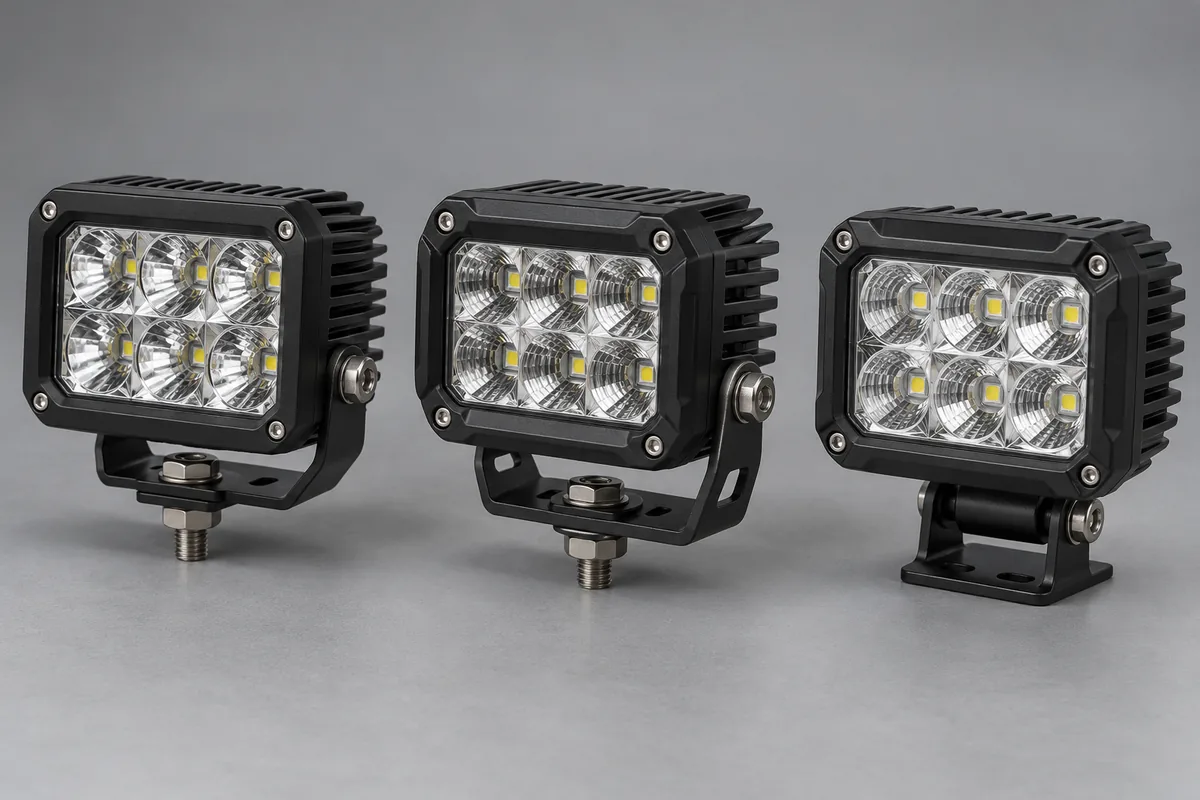
OEM vs. ODM: Key Differences
Use this comparison as a procurement framework rather than a set of universal rules. Both models can involve shared engineering and negotiated commercial terms. The practical difference is how much usable design already exists, how much development is needed and how responsibility is allocated.
| Feature | OEM | ODM |
|---|---|---|
| Design responsibility | Buyer-led requirements or design | Manufacturer-led base platform |
| Engineering development | Agreed buyer and supplier roles | Base engineering plus agreed changes |
| NRE | Depends on new development scope | Depends on adaptation and validation |
| Tooling | Dedicated assets may be required | Existing or new tools as needed |
| MOQ | Quoted for the configuration | Quoted for the configuration |
| Lead time | Development and approval milestones | Adaptation and approval milestones |
| Intellectual property | Ownership and licenses by contract | Base and project rights by contract |
| Customization depth | Can support extensive development | Can include substantial design changes |
| Exclusivity | Requires explicit agreement | Requires explicit agreement |
| Suitable buyers | Buyers seeking proprietary development | Buyers adapting a suitable platform |
Tooling Costs, NRE and Development Timelines
Non-recurring engineering, or NRE, covers agreed one-time development activities such as design work, simulations, prototypes, fixtures and validation. Tooling may be quoted separately. Request an itemized proposal separating engineering, molds, samples, testing, packaging setup and unit production costs. Identify payment milestones, deliverables and the treatment of unsuccessful trials.
Costs depend on geometry, materials, optical tolerances, cavity count, tooling life expectations and existing assets. There is no universal mold price, development period or MOQ for automotive lighting. A new optical system normally requires more work than adapting a suitable platform, but a difficult ODM modification can also create substantial development costs.
Build a schedule around requirements approval, prototype evaluation, tool trials, design verification, applicable compliance work, pilot production and shipment. Ask which stages can overlap and which approvals control progress. Quote first-order and repeat-order lead times separately, including component availability and packaging preparation.
Compare landed cost and lifecycle support alongside purchase price. Engineering revisions, retesting, rejected inventory and warranty handling can outweigh initial savings. Agree how changes affect the budget and schedule before authorizing tooling.
Intellectual Property, Tooling Ownership and Exclusivity
Separate background IP, developed before the project, from newly created project IP. List the rights to drawings, firmware, optical data, test reports and manufacturing know-how. Ownership, access and a license to use are different rights; paying NRE alone does not determine any of them.
Tooling terms should identify each asset, legal owner, storage location and permitted use. Specify maintenance, repair, replacement, insurance, access and transfer arrangements. Define what happens when the relationship ends and whether another factory can practically use the tools. Do not assume a fixed mold life or automatic transferability.
An NDA protects agreed confidential information but does not automatically create product exclusivity. If exclusivity is needed, define the product version, territory, sales channels, duration, performance conditions and exceptions. Branding protection should also address trademark use, packaging files, overruns and leftover branded inventory.
For ODM platforms, the manufacturer may retain the base design and offer related versions to other buyers. Discuss any proposed restriction explicitly and put the agreed scope in writing. NVEL-specific ownership or territory rights must be confirmed for the actual project.
Optical, Thermal and Electrical Customization
Optical changes should begin with the intended function and market: headlamp, fog lamp, auxiliary off-road lamp or another application. Specify beam distribution, glare limits where applicable, traffic direction, color and measurement conditions. Compare photometric evidence for the complete configuration rather than judging performance from a lumen claim or beam photograph alone.
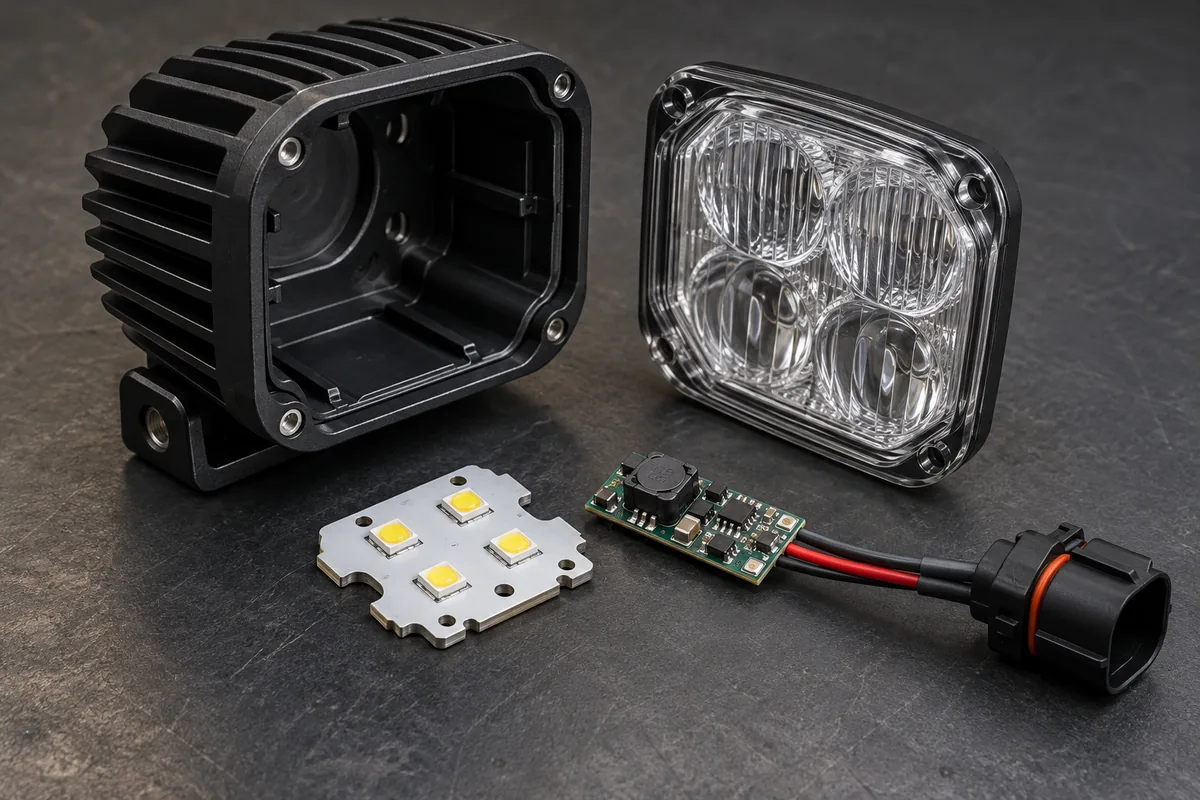
Thermal changes require attention to LED operating temperature, heat paths, installation space, ambient conditions and sustained output. A different housing, coating, drive current or enclosure can change thermal behavior. Validate representative installations instead of assuming that the original platform’s results cover every modified version.
Electrical requirements include supply range, current draw, protection, connectors, pinout, switching and vehicle diagnostics. “CANBus compatible” is not a universal vehicle guarantee; diagnostic behavior varies. Define electromagnetic compatibility requirements and test the selected configuration against the intended application.
Freeze the approved bill of materials and revision. Establish a controlled process for substitutions, firmware changes and engineering updates, including when renewed testing is required.
Quality Control and Regulatory Compliance
Quality depends on process control and evidence, not the OEM or ODM label. Request the project’s inspection plan, incoming component controls, assembly checks, traceability and handling of nonconforming products. Agree critical characteristics, sampling methods, acceptance limits and warranty investigation procedures. Factories do not universally use identical SMT equipment, cleanrooms or 100% aging tests.
NVEL holds ISO 9001 and IATF 16949 certificates. These support evaluation of quality management capability; they are not product road-use approvals. Buyers should review the relevant certificate documents and verify applicability to the supplying entity and project without assuming an unverified scope or validity period.
For applicable U.S. lighting equipment, FMVSS No. 108 establishes federal requirements and manufacturers self-certify compliance. A DOT marking should not be described as a government-issued product approval. UNECE systems use type approval under the applicable UN regulations, with requirements depending on the device and adopting market. These routes are distinct.
Road legality depends on the specific product, intended use, installation and sales market. An approved component does not automatically legalize every retrofit. Review reports and approval documents for the exact model and revision; modifications may require reassessment. Waterproofing or EMC test results alone do not establish road-lighting compliance.
How to Choose Between OEM and ODM
Choose the path that fits the business requirement. A buyer seeking a proprietary form factor, controlled technical architecture or deeply differentiated optics may favor a development-led OEM arrangement. Confirm that engineering resources, budget and realistic validation time are available before committing.
An existing ODM platform may suit catalog expansion, a market trial or a project whose requirements closely match an available design. Evaluate the sample and documentation first. Lower upfront development effort is useful only if the product meets customer needs and the supplier can support repeatable production.
A hybrid path is often practical: evaluate an existing platform, agree meaningful modifications and reserve deeper development for features with demonstrated commercial value. Compare written proposals using the same specifications, quality gates and market requirements. In OEM vs ODM automotive lighting decisions, the contract and evidence matter more than the label.
Questions to Ask Before Placing an Order
Before issuing a purchase order, ask these questions and require clear written answers. Assign an owner to unresolved items so purchasing, engineering and sales teams approve the same configuration.
- Who is responsible for design, engineering validation and market compliance?
- What exact model, revision, bill of materials and sample define the order?
- Which NRE, tooling and testing charges are included or excluded?
- What are the MOQ, packaging quantities and repeat-order conditions for this configuration?
- Who owns or may use each design file, tool and project deliverable?
- Is any exclusivity agreed, and what are its limits and conditions?
- Which tests and approval documents cover the final modified product?
- What inspection criteria, traceability and change-notification process apply?
- What milestones determine delivery, and how are delays or revisions handled?
- How are defects, warranty claims, spare parts and discontinued components managed?
How NVEL Supports OEM and ODM Projects
NVEL supports automotive lighting sourcing discussions through its OEM and ODM solutions and product range. Start by sharing the intended lighting function, vehicle application, target markets, technical requirements, forecast volume and branding needs. This gives the team a basis to review available platforms and proposed development work.
Review NVEL’s automotive lighting solutions and product catalog to identify relevant options. Ask for a project-specific proposal defining the customization scope, sample plan, quality controls and required documentation.
NVEL’s ISO 9001 and IATF 16949 certificates can inform supplier qualification. They do not replace evaluation of the exact lighting product. Costs, MOQ, timing, tooling rights and any exclusivity require written confirmation; this guide makes no project-specific commercial guarantee.
FAQ
Can an ODM product become exclusive later?
Possibly, if the supplier agrees. A dedicated modification or new tool does not automatically create exclusivity. Define the protected version, rights, territory, duration and conditions in a written agreement.
Does an OEM buyer own all CAD files and tooling?
No automatic rule applies. Ownership and access depend on the contract, pre-existing supplier IP and agreed deliverables. List each file and asset explicitly, including transfer and use rights.
Are ODM lights lower quality?
The sourcing model alone does not establish quality. Compare product-specific testing, process controls, inspection results and field support. Evaluate production samples against agreed acceptance criteria.
Are catalog ODM products already road legal?
Do not assume so. Verify the exact product, installation, target market and supporting documents. Changes to optics, electronics or other features may affect compliance and require additional evaluation.
What MOQ and development time should buyers expect?
Request configuration-specific quotations. Tooling needs, component purchasing, customization, validation and production planning determine the answer. No single MOQ or timeline applies to every OEM or ODM lighting project.
Who pays for tooling maintenance?
The contract should allocate routine maintenance, repairs, replacement and storage costs. Record tooling ownership and access separately. Paying the initial tool charge does not settle every lifecycle obligation.
Conclusion
OEM and ODM are useful starting points for a sourcing discussion, but neither label guarantees ownership, lower cost, faster delivery or regulatory compliance. Select a model by comparing the actual design work, validation obligations, commercial exposure and long-term supply requirements.
Approve the specification and sample, clarify IP and tooling terms, and verify market requirements before scaling production. For related engineering topics, browse the Technical Guides Hub. A well-defined project gives both buyer and manufacturer a clearer basis for reliable cooperation.
Discuss Your Automotive Lighting Project
Share your target market, application and customization requirements with NVEL. Request a project-specific review of available products, engineering scope, samples and commercial terms.