
TECHNICAL GUIDES · LED FOG LIGHTS
Fog Light Beam Patterns Explained
What Makes a Good Fog Beam?
October 7, 2026 · 9 min read
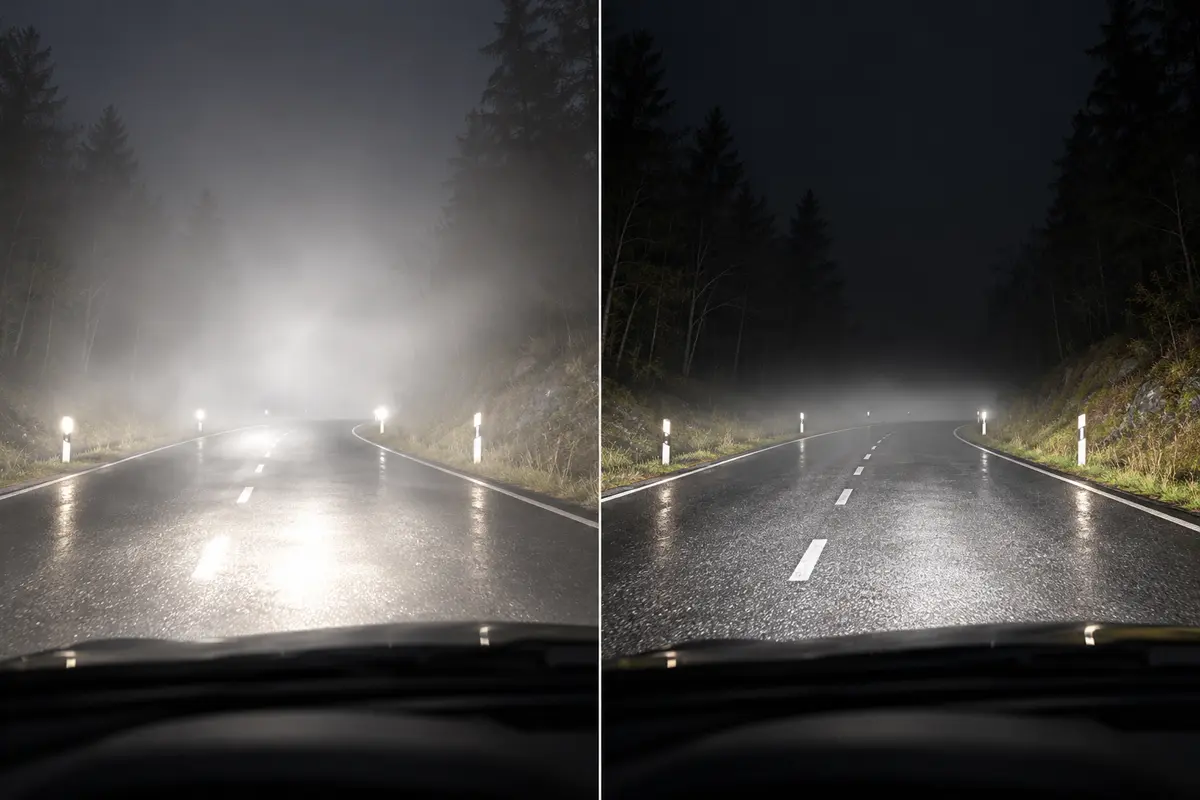
Fog, heavy rain, snow, and dust place water droplets or particles in the driver’s line of sight. When a lamp sends excessive high-intensity light upward, some of that light can be scattered back toward the vehicle, increasing glare and reducing contrast.
A functional fog beam is therefore not defined by raw lumens alone. Its value comes from controlled distribution: useful width across the road and shoulders, limited upward spill, an appropriate foreground balance, and correct aiming for the vehicle and mounting position.
This guide explains how fog light beam patterns work, how they differ from spot and flood beams, and how buyers can evaluate optical performance without relying on brightness claims alone.
Fog Light Beam Pattern Quick Guide
QUICK GUIDE
01 · Quick Answer: What Makes a Good Fog Light Beam Patterns?
A good fog light beam is broad horizontally, controlled vertically, and aimed to illuminate the road and roadside without sending excessive light upward or into other drivers’ eyes. Effective optical control matters more than raw brightness alone.
02 · The Anatomy of a Good Fog Light Beam Patterns
Wide Horizontal Coverage
A fog beam should place useful light across the lane, road edges, and nearby shoulders. This broad lateral distribution helps drivers identify lane markings, curves, curbs, and close-range hazards. There is no single universal beam angle: apparent width depends on optical design, test distance, measurement method, vehicle application, and any applicable market standard.
Controlled Vertical Distribution
Width is only useful when vertical light is controlled. A fog lamp should direct most of its usable output toward the road rather than above the driver’s sight line. Controlled distribution can improve contrast in adverse weather and reduce unnecessary glare for the driver and surrounding traffic.
A Defined Upper Boundary
Many effective fog optics create a recognizable upper boundary or cut-off that limits upward spill. The exact shape and sharpness vary with the optical system and regulatory context; a razor-sharp line is not the only valid design. What matters is that the upper portion of the beam remains deliberate and controlled.
Useful Foreground and Roadside Illumination
Good foreground illumination reveals nearby road texture and obstacles, but excessive intensity immediately in front of the bumper can cause the eyes to adapt to the bright near field. That adaptation may make the darker distance appear less visible. A balanced beam supports peripheral awareness without creating a distracting hotspot.

03 · Fog Beam vs. Spot, Flood and Driving Beams
A fog beam is not simply a small flood light. Different optical patterns solve different visibility tasks. For a deeper comparison of off-road distributions, see Spot vs. Flood vs. Combo Beam.
| Beam Type | Primary Purpose | Horizontal Coverage | Forward Reach | Vertical Control | Typical Use |
|---|---|---|---|---|---|
| Fog Beam | Low-visibility road illumination | Broad | Short to moderate | High priority | Fog, heavy rain, snow, dust |
| Spot Beam | Concentrated distance | Narrow | Long | Application-dependent | Open terrain and long-range off-road use |
| Flood Beam | Wide nearby coverage | Very broad | Short | Often less defined | Slow trails, work and scene lighting |
| Driving / Combo Beam | Mixed forward visibility | Moderate to broad | Moderate to long | Varies by optic | General auxiliary driving and off-road use |
04 · Why Vertical Beam Control Matters in Fog, Rain, Snow and Dust
Suspended droplets and particles scatter light in multiple directions. When a powerful lamp sends substantial output above the useful road zone, a portion can return toward the driver’s eyes as backscatter. The result may be more glare, lower perceived contrast, and greater visual discomfort even though the lamp produces more total light.
This is why lumen output alone cannot predict adverse-weather visibility. Optical efficiency, candela distribution, illuminance on the road, beam placement, and driver adaptation all contribute to performance. More light can help only when it is distributed where the driver can use it.
Key Takeaway: In poor weather, controlled placement of light is usually more useful than simply increasing raw output.
05 · Why Mounting Height and Aiming Matter
Mounting Position
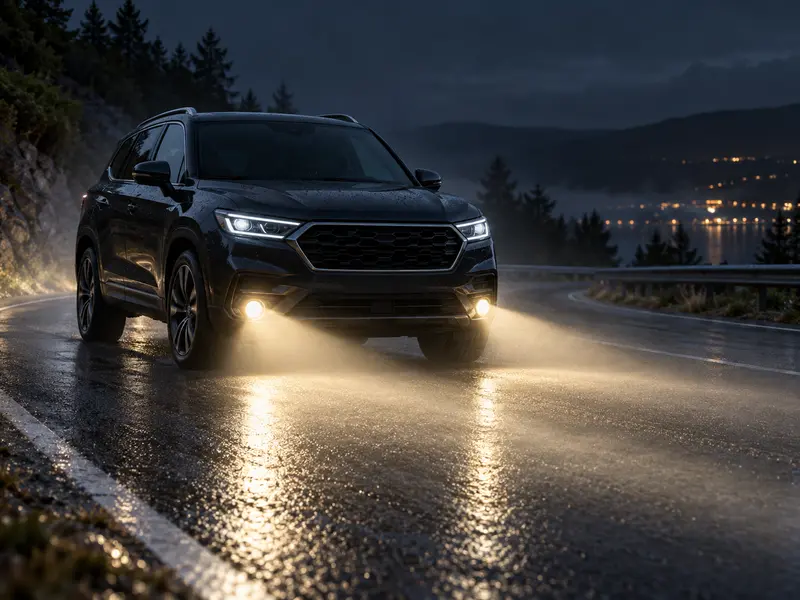
Fog lamps are commonly mounted low because that position can help place the beam near the road surface and reduce high-angle light. It should not be explained as projecting beneath a fixed fog layer. Weather density and droplet distribution vary, and no universal height guarantees correct performance.
Vertical Aim
Even a well-engineered optic can perform poorly when tilted too high. Aim should follow the lamp manufacturer’s instructions, vehicle geometry, and local requirements. Buyers should confirm that the bracket allows controlled adjustment and remains stable under vibration.
Avoiding Excessive Foreground Glare
Aim that is too low can concentrate brightness immediately ahead of the vehicle. This may create a bright foreground and reduce the driver’s ability to see farther into the scene. Evaluation should therefore consider the complete distribution rather than only the most visible hotspot.
06 · Amber vs. White Fog Lights: Does Color Change the Beam?
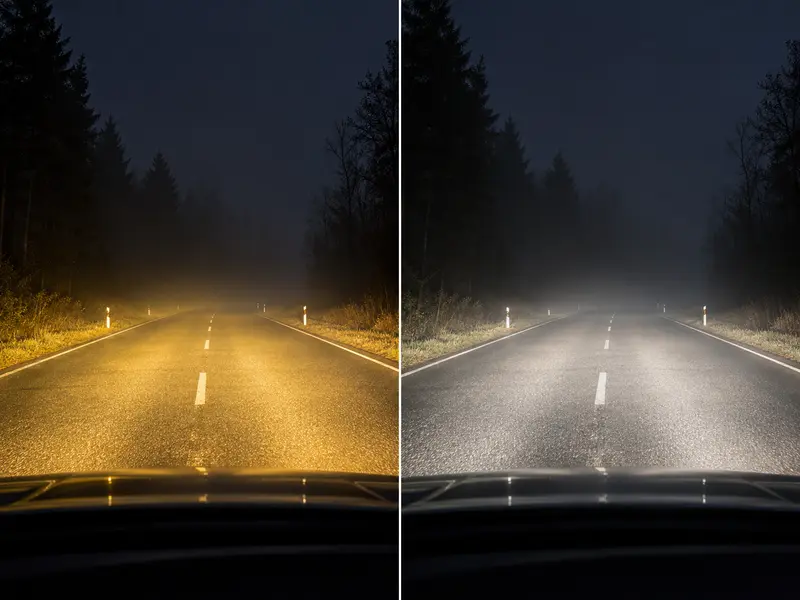
Amber / Selective Yellow
Some drivers prefer amber or selective-yellow light because it may improve perceived contrast and reduce subjective glare under certain adverse-weather conditions. Results depend on beam pattern, intensity, weather, surface reflectance, and individual perception. A color label or Kelvin value does not guarantee better penetration.
White
White fog lights can provide clear color recognition and visual consistency with modern headlamps. As with amber products, actual performance depends on the complete optical system. Common product color-temperature ranges are descriptions, not proof of beam quality.
Which Matters More: Color or Beam Control?
Color does not correct a poorly controlled beam. Horizontal distribution, vertical control, intensity placement, and correct aim are more fundamental. Buyers should evaluate the beam first, then choose a color option that fits the application and driver preference.
07 · Common Signs of a Poor Fog Light Beam Patterns
- Excessive upward spill that brightens mist, rain, snow, or dust above the useful road zone.
- A narrow hotspot with weak usable width at lane edges and shoulders.
- Uncontrolled glare visible from typical oncoming-driver positions.
- Too much foreground brightness with limited visibility beyond the near field.
- Poor edge definition or irregular streaks caused by unsuitable optics or installation.
- Inconsistent left/right distribution between a matched lamp pair.
- Incorrect aiming or brackets that cannot hold alignment.
08 · How to Evaluate a Fog Light Beam Patterns Before Buying
Distributors, brands, vehicle solution providers, and end buyers should request evidence that describes the complete lamp, not only the LED component.
- Review beam photos or photometric data. Confirm the test distance, surface, exposure, and whether the images represent the actual product.
- Assess horizontal coverage. Look for useful illumination across the intended lane and roadside area.
- Check vertical control. Identify the upper boundary, spill above it, and any intense glare zones.
- Examine hotspot and foreground balance. A bright center should not hide weak coverage elsewhere.
- Confirm mounting and aiming requirements. Verify bracket range, stability, vehicle fitment, and installation instructions.
- Request applicable compliance documentation. Check the exact lamp model, approval mark, test report, market, and intended road or off-road application.
- Compare color options after beam quality. Amber and white versions should be evaluated on distribution and intensity, not color claims alone.
For a broader review of construction, thermal control, sealing, and fitment, read What Makes a High Quality Fog Lights? You can also explore NVEL’s LED fog light range.
09 · Fog Light Standards and Compliance: What Buyers Should Check
A visually controlled beam and verified regulatory compliance are not the same thing. SAE J583 addresses front fog lamps in a North American context, while UNECE Regulation No. 149 is relevant to type approval for certain road-illumination devices in markets applying UNECE requirements. The appropriate rule depends on the market, vehicle, lamp type, installation, and intended application.
Buyers should ask for documentation tied to the exact product and approval scope. A cut-off by itself does not make a lamp street legal, and a general supplier statement does not replace model-specific test evidence. NVEL product compliance should be confirmed from the documentation supplied for the particular model and target market.
10 · Frequently Asked Questions
What beam pattern is best for fog lights?
A broad horizontal beam with controlled vertical distribution is generally most functional. The precise pattern should suit the vehicle, mounting position, intended use, and applicable rules.
Should fog lights have a cut-off line?
They should have a controlled upper boundary that limits upward spill. Its shape and sharpness vary by optical design and regulatory context, so a razor-sharp line is not a universal requirement.
Are flood lights the same as fog lights?
No. A flood light emphasizes wide nearby coverage, while a fog beam also prioritizes vertical control and glare management for low-visibility driving.
Are amber fog lights better than white fog lights?
Not universally. Some drivers prefer amber for perceived contrast or lower subjective glare, but beam distribution, intensity, optical control, and aim remain more fundamental.
Why can bright lights make visibility worse in fog?
Excessive upward light can scatter from airborne droplets or particles and return toward the driver, increasing glare and reducing contrast.
How should fog lights be aimed?
Follow the lamp manufacturer’s instructions, vehicle geometry, and local requirements. The beam should illuminate the road without projecting excessive light upward or creating an overly bright near field.
Do fog lights need to meet SAE or UNECE requirements?
Requirements depend on the market, vehicle, lamp type, installation, and whether the lamp is intended for public-road use. Verify model-specific documentation rather than assuming compliance from appearance.
Choose the Right Fog Light Beam for Your Application
Evaluate optical control, beam distribution, vehicle application, mounting, aiming, and market requirements together. NVEL supports distributors, brands, and vehicle partners with application-focused LED fog light solutions.
Browse more automotive lighting technical guides.