
TECHNICAL GUIDES · LED OFF-ROAD LIGHTS
Spot vs. Flood vs. Combo Beam:
Which Off-Road Light Pattern Do You Need?
A practical guide to choosing light distribution for trails, overlanding, and open terrain.
October 6, 2026 · 8 min read
Choosing an off-road light is not simply a matter of selecting the highest lumen rating. Output matters, but the more useful question is where that light is distributed. A lamp that concentrates output far ahead serves a different purpose from one that illuminates trail edges, ditches, rocks, and nearby working areas.
This guide compares the three most common off road light beam patterns—spot, flood, and combo—by distance, width, mounting position, and driving environment. Understanding those differences helps vehicle builders, distributors, and end users specify a lighting setup that supports the way the vehicle is actually used.
Off-Road Beam Patterns
QUICK GUIDE
Quick Comparison: Spot vs. Flood vs. Combo
| Feature | Spot Beam | Flood Beam | Combo Beam |
|---|---|---|---|
| Beam Shape | Narrow and concentrated | Wide and dispersed | Combined narrow + wide distribution |
| Light Distance | Long range | Short to medium range | Medium to long range |
| Peripheral Coverage | Limited | Excellent | Balanced |
| Typical Mounting | Grille, bumper, or carefully aimed roof position | A-pillar, side, or rear | Front bumper or light bar |
| Best Application | Higher-speed open terrain | Slow technical trails, work, or scene lighting | General off-road use and mixed terrain |
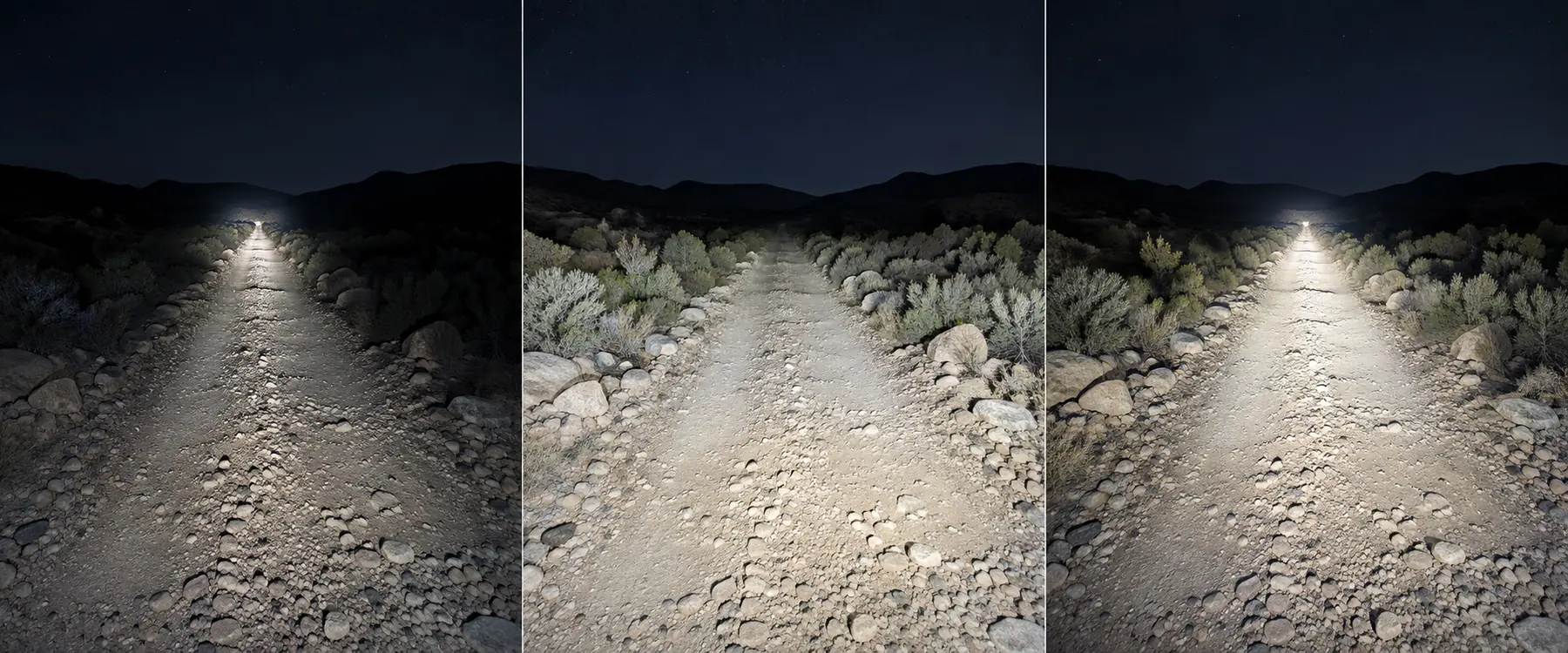
Spot, flood, and combo beam distributions shown on the same night trail.
What Is an Off-Road Light Beam Pattern?
A beam pattern describes how an optical system distributes light. The LED produces light, while the reflector, lens, or combined optical elements control its direction. Their geometry determines beam width, forward intensity, usable distance, and peripheral coverage. A narrow pattern places more intensity in a smaller forward area; a wide pattern spreads output across a broader field closer to the vehicle.
This is why lumens and beam pattern are not interchangeable. Lumens describe total light output, but do not show where that output lands. Two lamps with similar lumen output can create very different trail visibility because one concentrates light in the distance while the other illuminates the near field and sides. Beam selection should therefore begin with the vehicle speed, terrain, mounting position, and visibility task—not a lumen figure alone.
01 · Spot Beam: Long-Range Illumination
How a Spot Beam Works
A spot beam uses narrow, concentrated optical distribution to direct a larger share of usable intensity forward. The result is stronger long-range visibility with less illumination at the sides. Exact beam angles vary by optical design and manufacturer, so the term “spot” should be evaluated through the actual beam image or photometric data rather than treated as one universal angle.
Best Applications for Spot Beams
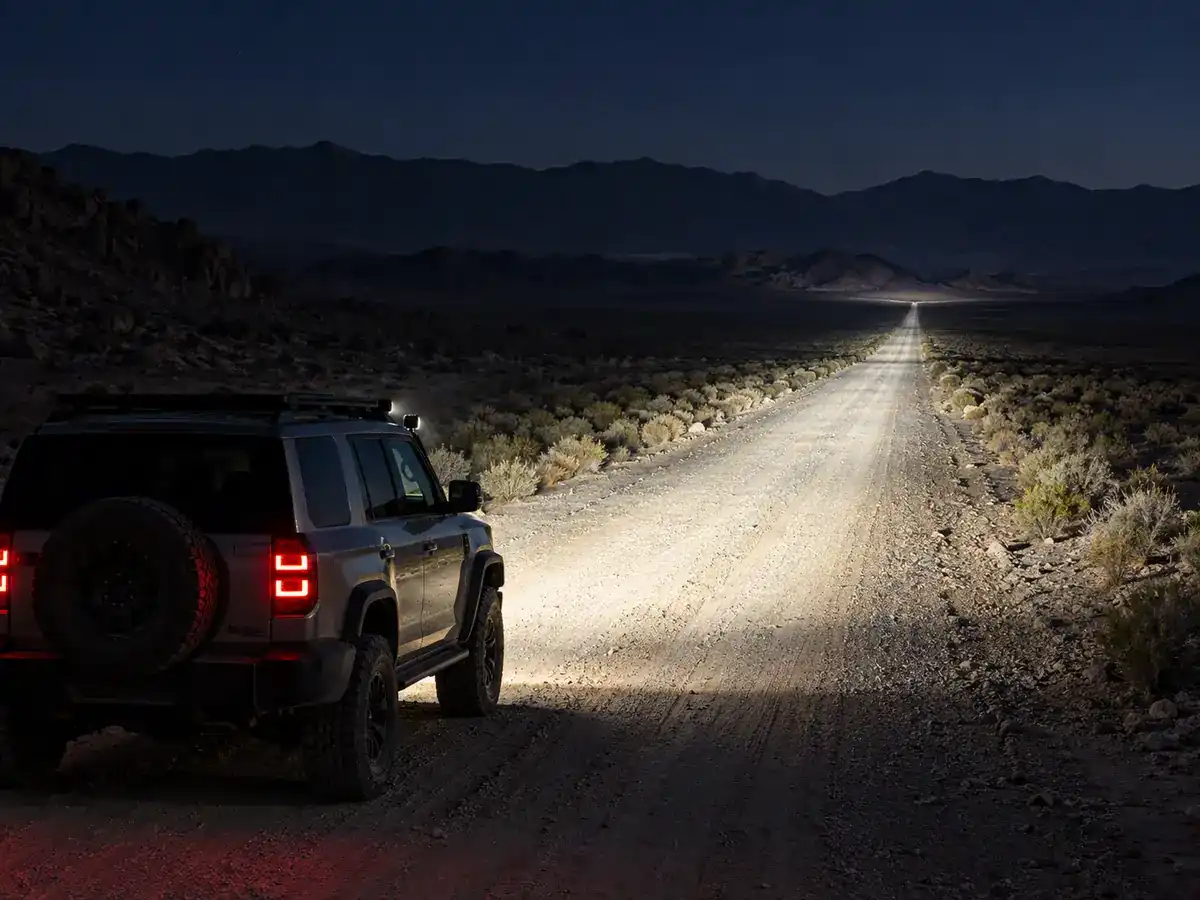
Spot beam off-road lights are well suited to high-speed open desert terrain, long dirt roads, and other off-road environments where identifying distant changes in the route is important. They can help the driver see a turn, rise, obstacle, or trail marker earlier. On slow, confined trails, however, a spot-only system may leave the near field and peripheral areas underlit.
Where to Mount Spot Lights
Front bumper and grille locations provide a stable forward-facing position and make aiming easier. Roof mounting can increase the mounting height, but it requires careful aiming to minimize hood glare and unwanted reflections. The lamp should be aligned with the intended driving line and checked from the normal seating position before night use.
02 · Flood Beam: Wide-Area Visibility
How a Flood Beam Works
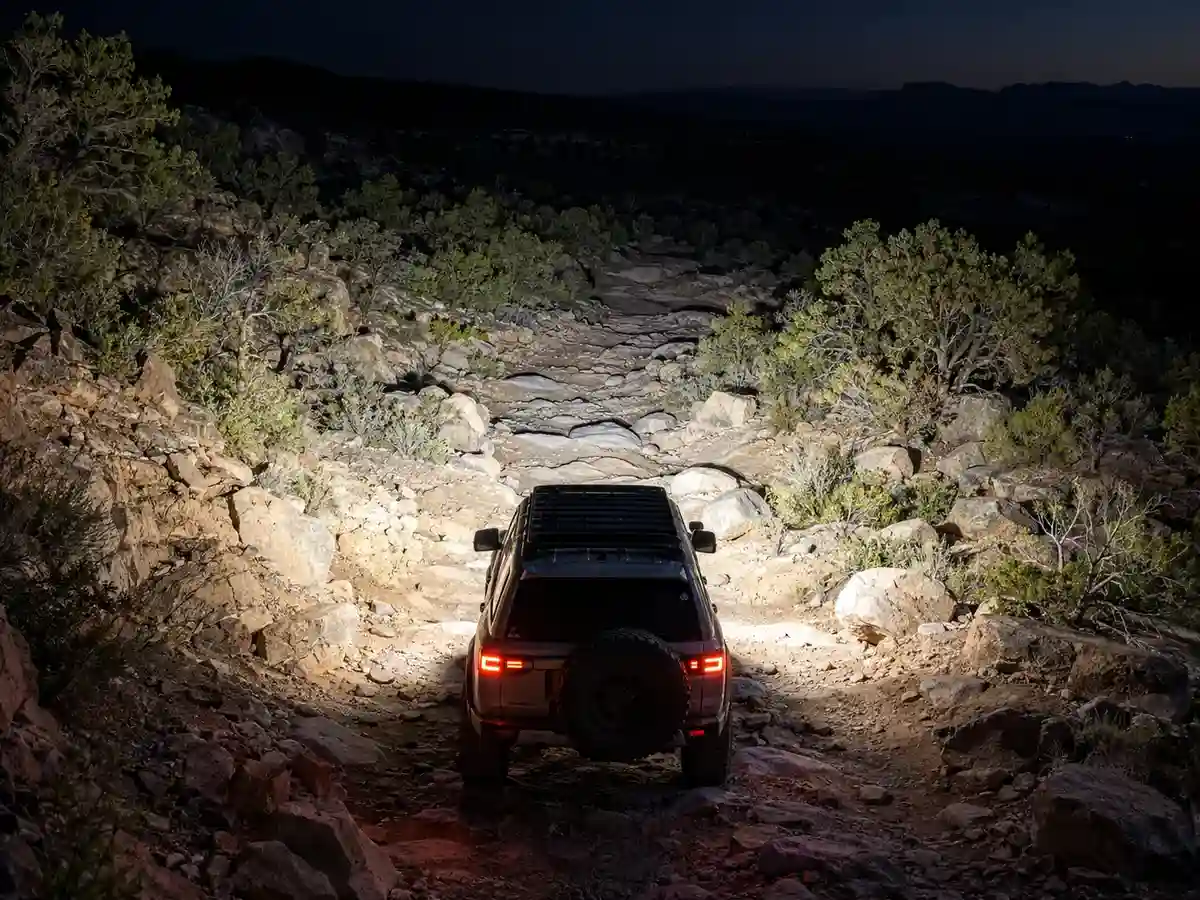
Flood optics distribute light across a wide horizontal and vertical area. Rather than concentrating output far down the trail, they reveal more of the near and peripheral field. The wider pattern helps show trail edges, ditches, rocks, low branches, campsite areas, and work zones that can sit outside the center line of a spot beam.
Best Applications for Flood Beams
Flood beam off-road lights work well for rock crawling, slow technical trails, recovery operations, loading, agricultural work, and scene lighting. They support spatial awareness at lower speeds, where nearby hazards and vehicle placement matter more than maximum forward reach. Excessive forward flood output at higher speeds can create a bright foreground that makes the darker distance harder for the driver to interpret.
Where to Mount Flood Lights
A-pillar or ditch-light positions can direct coverage toward trail edges. Side and rear mounting can support maneuvering, work, and camp lighting. Aim must be controlled so the beam serves the intended area without reflecting strongly from mirrors, body panels, dust, or nearby surfaces.
03 · Combo Beam: Balancing Distance and Width
How a Combo Beam Works
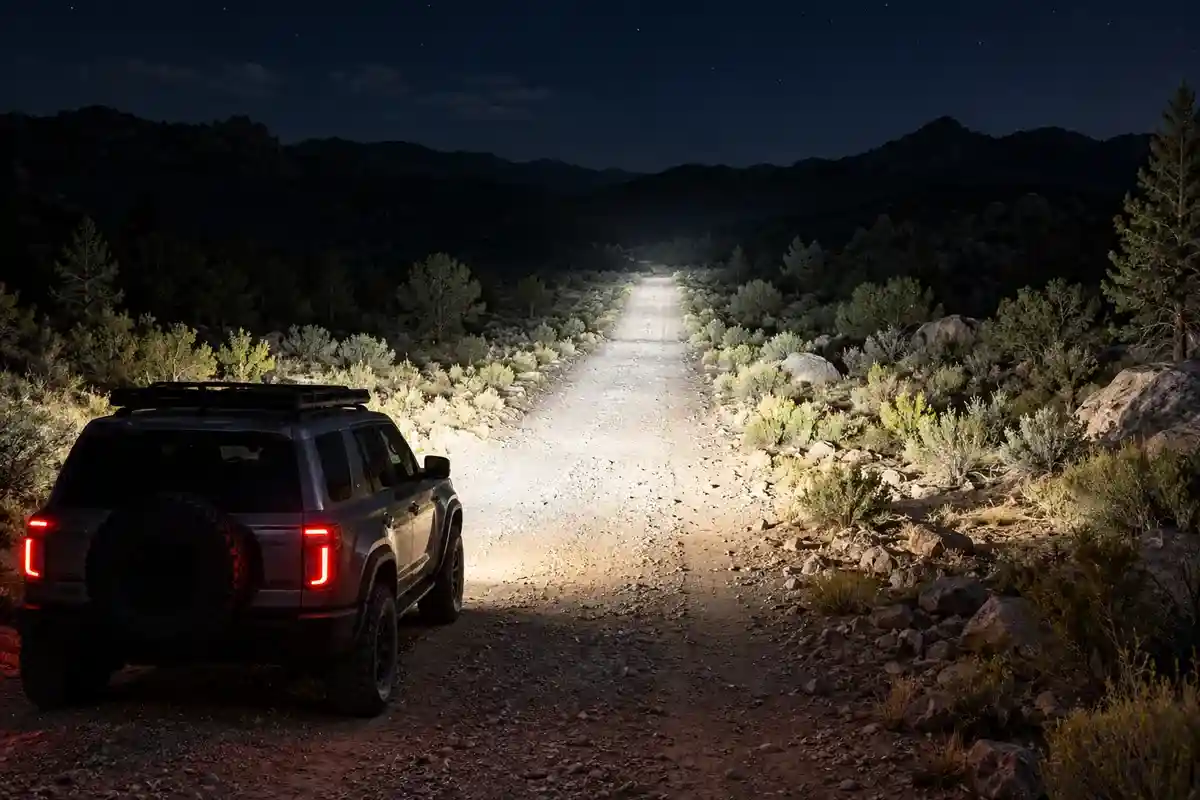
A combo or hybrid beam combines a concentrated forward distribution with wider peripheral illumination in one lamp. Depending on the optical design, central optics may provide longer-range intensity while outer optics spread light toward the sides. Manufacturers can arrange these elements differently, so combo beam performance should be judged by the actual distribution rather than the label alone.
When a Combo Beam Makes Sense
Combo beam off-road lights are practical for overlanding, mixed terrain, general trail driving, and vehicles with limited mounting space. A single light bar can provide both forward reach and usable side coverage without requiring separate housings. This balance makes combo optics versatile, but not automatically optimal for every task; a specialized multi-light system can provide more precise control.
Spot vs. Flood vs. Combo: Which Beam Pattern Should You Choose?
- High-speed open terrain: Choose spot distribution when longer-range forward visibility is the primary requirement.
- Technical trails and rock crawling: Choose flood distribution when near-field detail, trail edges, and peripheral obstacles are the priority.
- Overlanding and mixed driving: Choose combo distribution when the route frequently changes and one primary lamp must cover both distance and width.
Multiple-Light Setup
A professional setup does not always require choosing only one pattern. Forward-facing spot lights can provide long-range visibility while side or peripheral flood lights reveal nearby trail boundaries. Separate circuits also let the driver use only the lighting needed for a given environment. Mounting height, aiming, electrical capacity, dust, weather, and local regulations should all be considered before finalizing the system.
Does More Lumens Mean a Better Beam Pattern?
No. Lumens represent total light output; beam pattern describes where and how that output is distributed. A high-lumen lamp can still create poor usable visibility if its distribution is unsuitable, uncontrolled, or badly aimed. Lux and intensity measurements can help describe how much light reaches a particular surface or direction, but they should be interpreted together with beam shape, distance, and the intended driving task.
Common Off-Road Lighting Setup Mistakes
- Using only long-range spot lights: This can leave trail edges and nearby obstacles difficult to see.
- Using excessive flood lighting at higher speeds: A very bright foreground can reduce the driver’s ability to interpret darker areas farther ahead.
- Poor mounting or aiming: Incorrect angles can cause hood glare, reflections, wasted output, and visual fatigue.
- Ignoring peripheral visibility: Side hazards, turns, ditches, and obstacles often appear outside the forward center line.
Frequently Asked Questions
Is spot or flood better for off-road driving?
Neither is universally better. Spot beams suit longer-range visibility in open terrain, while flood beams suit slow trails, peripheral awareness, and work areas.
What is a combo beam on an LED light bar?
A combo beam combines narrow forward distribution and wider side distribution within one light bar. The precise optical layout varies by product design.
Can I use spot and flood lights together?
Yes. A forward spot plus side or peripheral flood setup can provide both long-range visibility and wider trail coverage, with separate switching where appropriate.
Where should flood lights be mounted?
Common positions include A-pillars, sides, and the rear, depending on the required coverage. They should be aimed to reduce reflection and avoid distracting other drivers.
Are more lumens always better for off-road lights?
No. Useful illumination depends on optical distribution, intensity, aiming, and the driving environment as well as total lumen output.
Which beam pattern is best for overlanding?
Combo beams are often practical for mixed routes and limited mounting space. Vehicles with multiple mounting positions may benefit from separate spot and flood lamps for more control.
Choose the Right Off-Road Lighting Solution
Explore NVEL off-road LED light bars and pod lights for different beam patterns and vehicle applications. For distributors, brands, and professional vehicle projects, our team can also support product selection and customized lighting requirements.