INDUSTRY INSIGHTS
LED Fog Light Market Outlook 2026–2030: Trends & B2B Opportunities
The automotive lighting industry continues to evolve as LED technology, vehicle design, and buyer expectations reshape the market for front fog lamps.
For automotive lighting distributors, wholesalers, aftermarket brands, and importers, the LED fog light market presents opportunities beyond simply replacing traditional halogen products. Vehicle-specific replacement demand, product differentiation, electronic compatibility, and evolving lighting regulations are influencing how businesses select and source fog lights.
However, the market is not moving in one direction. While LED technology is becoming increasingly important across automotive lighting applications, some newer vehicle designs are reducing the use of separate front fog lamps or integrating similar lighting functions into broader front-lighting systems.
Understanding both developments is essential for making informed sourcing and product portfolio decisions.
This article explores the LED fog light market outlook for 2026–2030, including major industry trends, regional considerations, OEM and aftermarket demand, commercial risks, and practical opportunities for B2B buyers.
Table of Contents
Quick Guide: Five Market Signals to Watch
QUICK GUIDE
01
LED Replacement Demand
Existing vehicles equipped with conventional fog lamps may continue to support replacement and upgrade demand, subject to compatibility and local regulations.
02
Integrated Front Lighting
Some vehicle platforms are combining lighting functions, creating potential challenges for traditional standalone fog lamp products.
03
Vehicle-Specific Fitment
Accurate mounting, connector, electrical, and application compatibility can become important competitive advantages.
04
Regional Compliance
Different markets impose different requirements for road-use lighting products, affecting product selection and import decisions.
05
B2B Product Differentiation
Distributors may find opportunities in reliable product quality, clear documentation, appropriate model coverage, and responsive supplier support.
1. LED Fog Light Market Overview: Where the Industry Stands
The LED fog light market includes several product categories and commercial channels.
These may include factory-installed LED front fog lamps, replacement lamp assemblies, aftermarket upgrades, and specialized auxiliary lighting products. However, not every auxiliary lamp or decorative lighting product qualifies as a regulated front fog lamp.
Market research reports may use different definitions, geographic coverage, product classifications, and revenue measurement methods. As a result, their published market-size estimates are not always directly comparable.
For B2B buyers, this distinction matters. A global revenue forecast does not necessarily indicate demand for a specific replacement lamp, vehicle platform, or regional product category.
Why LED technology remains relevant
Compared with conventional filament-based lighting, properly engineered LED systems can offer advantages in packaging flexibility, electrical efficiency, optical design, and styling options.
Actual performance depends on the complete lamp assembly, including its optical system, driver electronics, thermal management, and installation conditions.
The commercial opportunity is therefore not simply about using LEDs. It is about supplying products that meet specific vehicle applications, customer expectations, and market requirements.
Market outlook for 2026–2030
The 2026–2030 period is likely to involve a combination of LED replacement demand, product upgrades, tighter application requirements, and changes in vehicle lighting architecture.
This outlook should be understood as a qualitative assessment of market drivers and risks, not as a guaranteed growth forecast.
2. Key Drivers Influencing LED Fog Light Demand
Several factors can support demand in particular LED fog light market segments.
Replacement demand from existing vehicles
Vehicles already equipped with fog lamps may require replacement assemblies because of damage, aging, electrical failure, or other maintenance needs.
This installed vehicle base can provide opportunities for suppliers offering suitable replacement products.
Demand depends on vehicle age, regional vehicle populations, original equipment configurations, and the availability of compatible parts.
Upgrades from conventional lighting
Some vehicle owners and aftermarket businesses are interested in LED-based lighting upgrades.
However, replacing a halogen light source with an LED product is not automatically suitable or road-legal.
Compatibility with the optical housing, electrical system, vehicle installation, and applicable regulations must be considered.
Product design and styling
Compact LED modules can offer designers flexibility in vehicle front-end styling and lamp packaging.
For aftermarket brands, appearance may also influence product positioning, but styling should not replace functional and compliance requirements.
Distributor demand for differentiated products
Distributors often need products that are distinguishable by application coverage, reliability, packaging, documentation, and customer support.
This creates opportunities for suppliers that can communicate product specifications clearly and support consistent commercial arrangements.
3. Five LED Fog Light Market Trends for 2026–2030
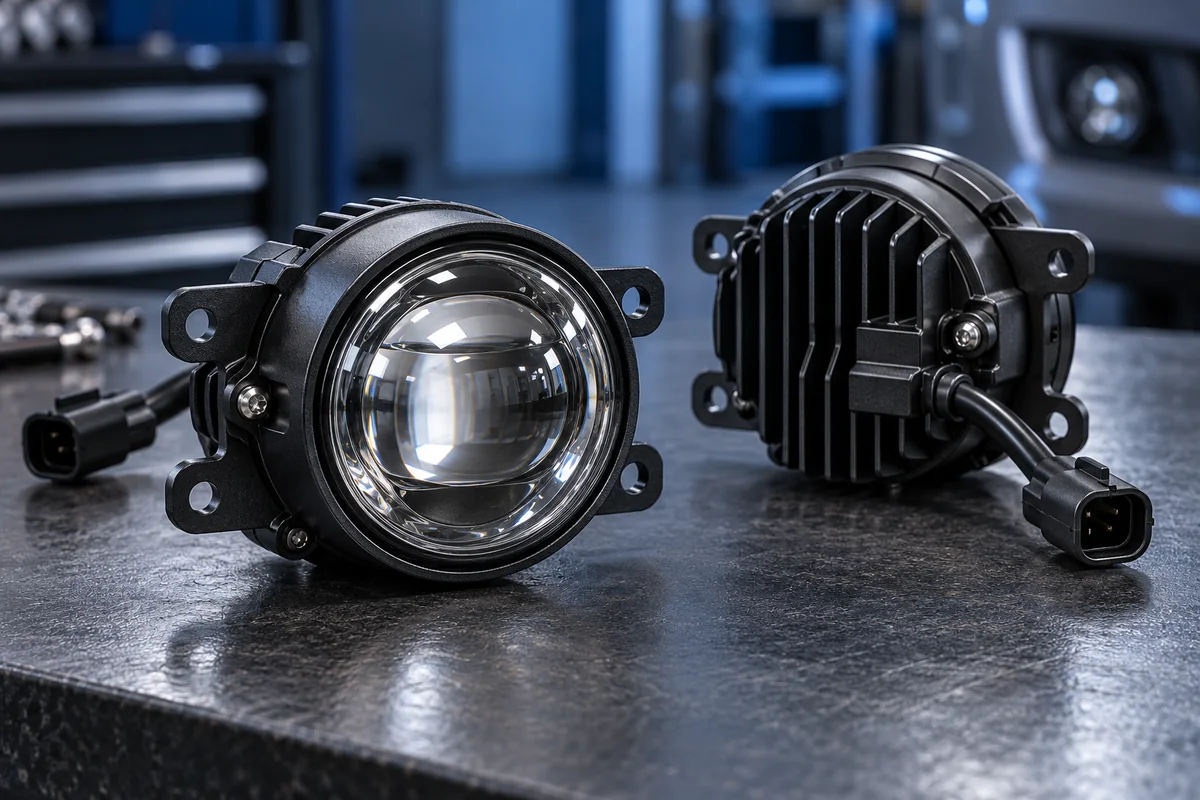
Trend 1: More emphasis on complete-lamp optical performance
Product buyers are increasingly exposed to performance claims involving lumens, beam width, cutoff, and glare control.
Yet these terms describe different aspects of lighting performance.
For market positioning, suppliers should distinguish between LED source specifications and measured performance of the complete lamp assembly.
Reliable photometric information can support product comparison and reduce misunderstandings.
Trend 2: Greater importance of vehicle-specific compatibility
Automotive lighting products must work within a vehicle’s mechanical and electrical environment.
Mounting dimensions, connectors, operating voltage, control signals, and diagnostic behavior can affect suitability.
As vehicle electrical architectures become more complex, accurate fitment information may become increasingly valuable for aftermarket distributors.
Trend 3: Continued interest in specialized product features
Certain aftermarket segments may show interest in features such as selectable color modes, distinctive optical configurations, or customized styling.
Commercial demand for these features depends on the vehicle application and target customer.
Buyers should also confirm whether a proposed feature is permissible for the intended road-use market.
A popular product feature in one region may be unsuitable for another.
Trend 4: Integration of front-lighting functions
Some automakers are reducing the use of conventional standalone front fog lamps or integrating related functions into headlamp and front-lighting systems.
This trend may reduce opportunities for certain new-vehicle standalone fog lamp applications.
At the same time, existing vehicles with dedicated fog lamps can continue to support replacement demand.
For suppliers, the implication is clear: future product planning should distinguish between new-vehicle OEM programs and the installed aftermarket vehicle base.
Trend 5: Documentation and consistency as competitive factors
As buyers compare suppliers, commercial value may increasingly depend on more than price and appearance.
Relevant product documentation, application accuracy, sample consistency, clear quality expectations, and dependable communication can help support long-term sourcing relationships.
These factors are particularly important when products are sold across multiple markets.
4. Regional Opportunities in the LED Fog Light Market
The LED fog light market does not have a uniform demand profile across all regions.
Differences in vehicle fleets, customer preferences, climate, regulation, and distribution channels can influence which products are commercially relevant.
| Region | Potential Market Considerations | B2B Sourcing Implications |
|---|---|---|
| North America | Vehicle-specific replacement demand, pickup and SUV applications, diverse aftermarket channels | Verify fitment, electrical compatibility, and applicable U.S. or Canadian requirements |
| Europe | Vehicle application accuracy, road-use approvals, product documentation | Confirm relevant regulatory requirements and traceable product information |
| Asia-Pacific | Diverse vehicle platforms, price segments, and distribution structures | Build product ranges around specific countries, models, and customer segments |
| Middle East | Vehicle mix, environmental operating conditions, and regional aftermarket preferences | Review thermal suitability, installation compatibility, and local requirements |
| Latin America and Africa | Varied vehicle age, replacement needs, import conditions, and price sensitivity | Prioritize relevant model coverage, dependable supply, and country-specific requirements |
These are qualitative market considerations, not rankings of regional market size or growth rate.
Why regional segmentation matters
A fog light that sells well in one market may not be appropriate for another because of vehicle fitment, electrical specifications, local regulations, or buyer preferences.
Distributors should therefore use market-specific product planning rather than assuming that a single universal catalog will meet every customer’s needs.
5. OEM vs. Aftermarket: Different Growth Opportunities
The OEM and aftermarket channels operate under different commercial conditions.
Understanding these differences can help B2B buyers evaluate future demand.
| Factor | OEM Channel | Automotive Aftermarket |
|---|---|---|
| Primary demand | New-vehicle programs and platform requirements | Replacement, repair, and suitable upgrades |
| Product development | Often tied to vehicle development and supplier qualification | Often driven by existing vehicle applications and distribution demand |
| Technical requirements | Vehicle-level integration and program-specific validation | Accurate fitment, safe installation, and market-specific compliance |
| Product lifecycle | Linked to vehicle programs | Linked to installed vehicle populations and replacement cycles |
| Commercial priorities | Program qualification, consistency, long-term supply | Model coverage, availability, pricing, packaging, and customer support |
| Main uncertainty | Changes in vehicle lighting architecture | Application fragmentation and regulatory limits on modifications |
OEM market considerations
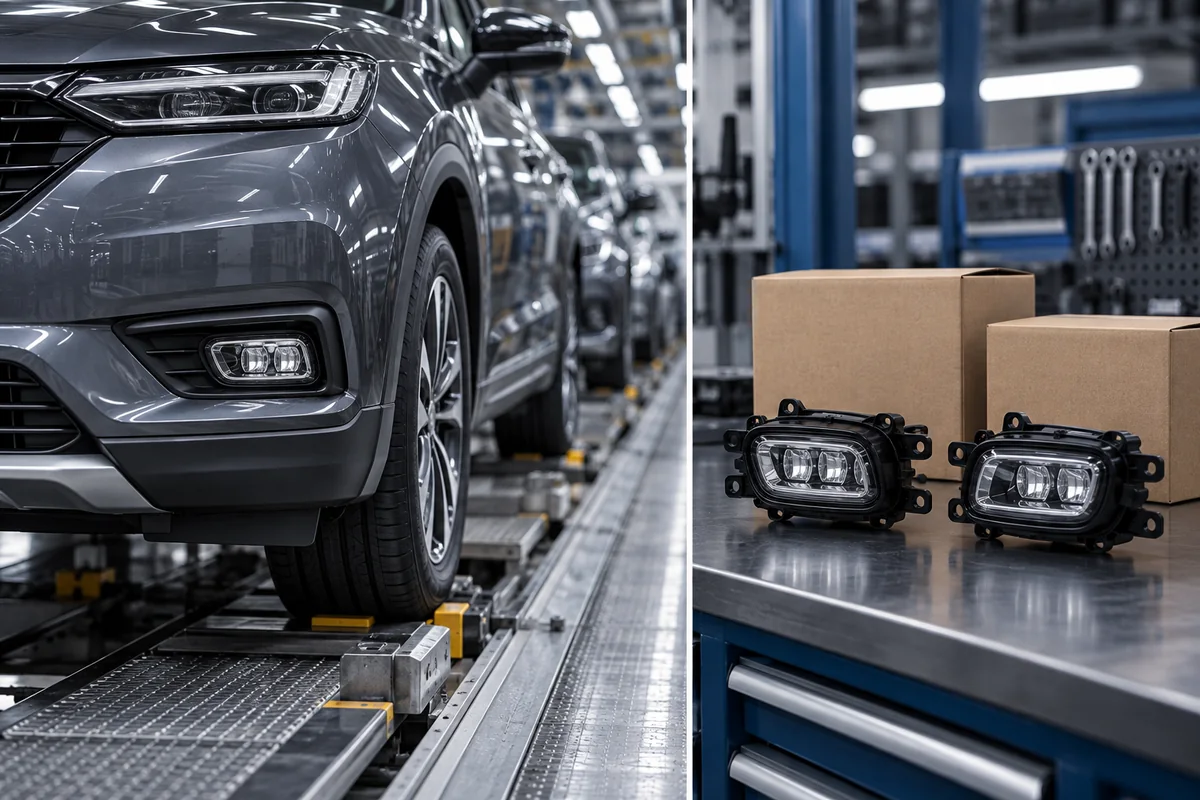
In the OEM channel, some new vehicle platforms may use integrated lighting solutions rather than traditional standalone fog lamps.
This means LED adoption across the wider automotive lighting industry should not automatically be interpreted as growth in standalone fog lamp installations.
Aftermarket market considerations
The aftermarket can remain relevant because existing vehicles continue to require suitable replacement components.
However, the commercial potential depends on which vehicles are in service, which parts fail or need replacement, and which upgrades are legally and technically appropriate.
For many independent distributors, application-specific aftermarket products may be more practical than attempting to compete directly in new-vehicle OEM supply programs.
6. Challenges and Risks Facing LED Fog Light Suppliers
A realistic market outlook should address potential constraints alongside growth opportunities.
Reduced standalone fog lamp fitment
If more vehicle platforms eliminate dedicated front fog lamps, the addressable market for some standalone OEM products may become smaller.
This does not eliminate replacement demand for vehicles already using fog lamps, but it can change the balance between market segments.
Regulatory and approval requirements
Automotive lighting regulations differ by market and product type.
Relevant frameworks may include UN Regulation No. 149 for road illumination devices and applicable national requirements such as FMVSS No. 108 in the United States.
Requirements must be assessed for the exact product, installation, destination market, and intended use.
A general supplier certification does not establish that every lamp is approved for road use.
Price competition and product similarity
Products with similar appearance or advertised specifications may differ substantially in optical performance, electrical design, durability, and documentation.
Buyers should avoid evaluating suppliers solely on catalog photographs and headline specifications.
Inventory and fitment complexity
Vehicle-specific applications can create a broad range of part numbers.
Poor fitment information or excessive inventory concentration can increase commercial risk.
Distributors should balance product coverage with realistic demand, availability, and inventory turnover.
Quality and warranty exposure
Unclear product specifications, inconsistent assembly, or inadequate application validation can increase returns and customer complaints.
Supplier discussions should therefore include sample approval, inspection criteria, warranty terms, and after-sales communication.
7. Opportunities for Automotive Lighting Distributors and Brands
The most attractive opportunity is not necessarily the product with the highest advertised output or the widest catalog.
For many B2B buyers, a more sustainable strategy is to identify underserved application needs and build a dependable product offering.
Focus on relevant vehicle applications
Review the vehicle models and customer segments that matter most in your target market.
Prioritize products with clear application information and a realistic demand base.
Build a differentiated product portfolio
Consider a product mix that addresses different vehicle types, customer budgets, and functional requirements.
Avoid expanding the catalog solely to increase the number of SKUs.
Improve product information
Clear specifications, installation guidance, application details, and appropriate supporting documentation can help distributors communicate more effectively with their customers.
Strengthen supplier relationships
Long-term cooperation may depend on consistent product identification, stable commercial terms, responsive communication, and the ability to resolve technical questions.
Evaluate private label opportunities carefully
Private label packaging and product positioning may help brands build recognition, provided that the underlying product quality and market suitability meet expectations.
Customization feasibility and commercial conditions should be confirmed with the manufacturer.
8. B2B Sourcing Strategy for the 2026–2030 Market
For distributors, importers, and automotive aftermarket brands, a structured sourcing process can reduce uncertainty.
Step 1: Define your target market
Identify the countries, vehicle applications, customer segments, and distribution channels you intend to serve.
Step 2: Separate replacement products from upgrades
Replacement assemblies and modification-oriented products can have different compatibility and regulatory considerations.
Make sure your catalog descriptions accurately reflect the intended use.
Step 3: Review technical documentation
Request relevant product specifications, application details, and supporting test or compliance information.
Confirm that documents correspond to the exact product version being purchased.
Step 4: Evaluate samples under relevant conditions
Assess fitment, electrical operation, optical performance, physical quality, and consistency according to the intended application.
Step 5: Confirm commercial arrangements
Discuss minimum order quantities, packaging, lead times, quality expectations, warranty handling, and delivery terms.
Step 6: Plan for product lifecycle changes
Vehicle platforms and lighting systems evolve.
Review product demand periodically and avoid assuming that every current application will remain commercially relevant throughout the forecast period.
Working with NVEL
NVEL supplies automotive LED lighting products for international B2B customers and welcomes discussions with distributors, wholesalers, importers, and aftermarket brands.
Buyers can contact the NVEL team to discuss available LED fog light products, application requirements, sourcing arrangements, and potential OEM/ODM cooperation.
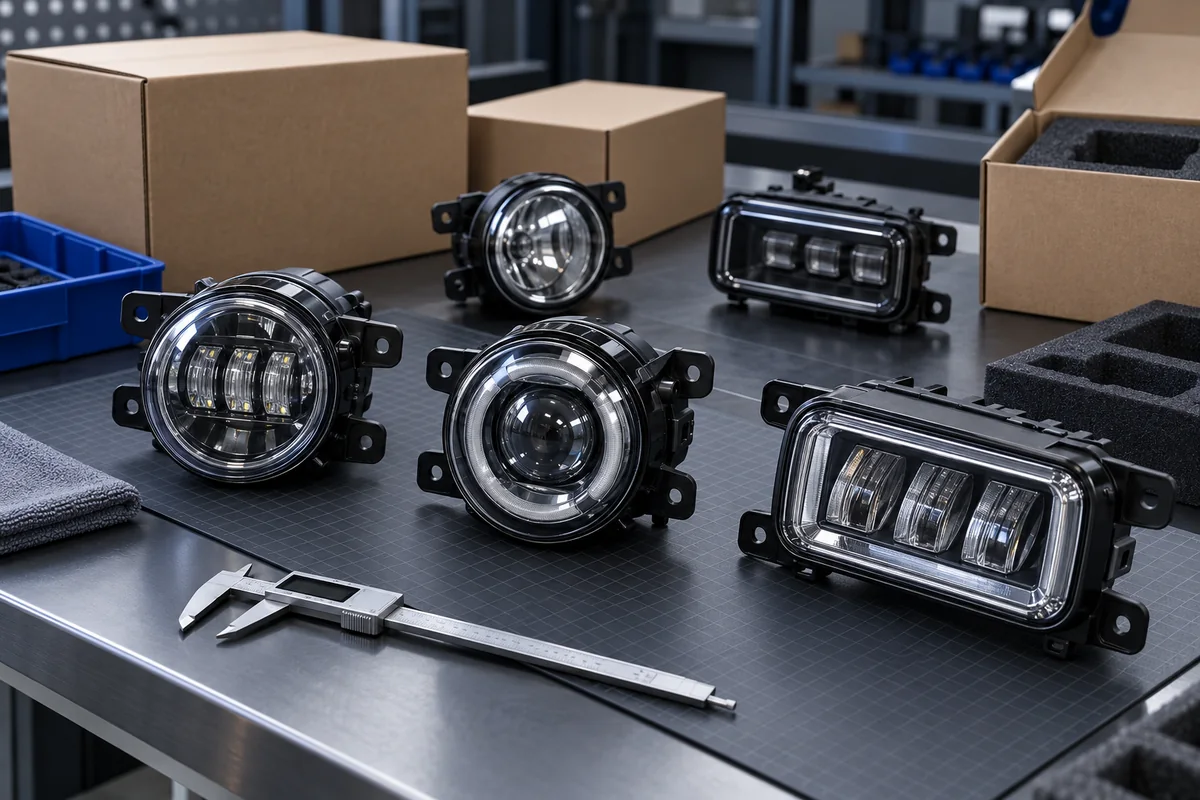
Review the NVEL Bi-LED fog light projector lens assembly for an example of an available product range.
Specific technical capabilities, customization options, compliance documentation, minimum order quantities, and delivery terms should be confirmed for each product and project.
9. Frequently Asked Questions
Is the LED fog light market expected to grow between 2026 and 2030?
Some market research forecasts indicate growth in LED fog lamp segments, but estimates vary by market definition and methodology. Replacement demand and LED adoption may support certain segments, while integrated vehicle lighting could limit others. Growth should not be assumed for every product category or region.
Will LED fog lights replace halogen fog lights completely?
LED technology offers important design and efficiency advantages, but replacement patterns depend on vehicle fleets, cost, compatibility, and regulation. Existing halogen-equipped vehicles may continue to generate demand for different replacement solutions.
Are standalone fog lights becoming obsolete?
Not across the entire vehicle market. Some newer vehicles are moving toward integrated front-lighting functions, while many existing vehicles still use dedicated fog lamps. The outlook differs between new-vehicle programs and aftermarket replacement applications.
Which regions offer opportunities for LED fog light distributors?
Opportunities can exist in multiple regions, but product suitability depends on local vehicle populations, regulations, customer preferences, and distribution channels. Buyers should evaluate country- and application-specific demand rather than rely on broad regional assumptions.
What matters most when sourcing wholesale LED fog lights?
Important factors include vehicle compatibility, optical performance, electrical suitability, documentation, product consistency, commercial terms, and after-sales support. A competitive unit price alone does not establish product suitability.
Can LED fog lights be customized for private label brands?
Private label and OEM/ODM possibilities depend on the supplier, product design, project scope, and order requirements. Buyers should confirm feasible branding, packaging, technical changes, testing needs, and commercial terms before committing to a project.
Conclusion: A More Selective Market Creates B2B Opportunities
The LED fog light market outlook for 2026–2030 is shaped by two parallel developments: continued demand for suitable replacement and aftermarket products, and the evolution of integrated lighting systems in newer vehicles.
For distributors and automotive lighting brands, these changes make product selection, application knowledge, regulatory awareness, and supplier evaluation increasingly important.
Rather than treating all LED fog lights as a single growth category, businesses should identify the vehicle applications, customer needs, and regional requirements most relevant to their markets.
A focused product portfolio and dependable sourcing relationships can help buyers respond to changing demand with greater confidence.
Explore NVEL’s automotive LED lighting products or contact our team to discuss your sourcing requirements and potential cooperation opportunities.
Sources and Further Reading
- UNECE — UN Regulation No. 149, Road Illumination Devices
- Research and Markets — Automotive Fog Lights Market
- Mordor Intelligence — Automotive Fog Lights Market
Market research forecasts are third-party estimates and may use different definitions and methodologies. They should not be interpreted as guaranteed future results.