Technical Guides

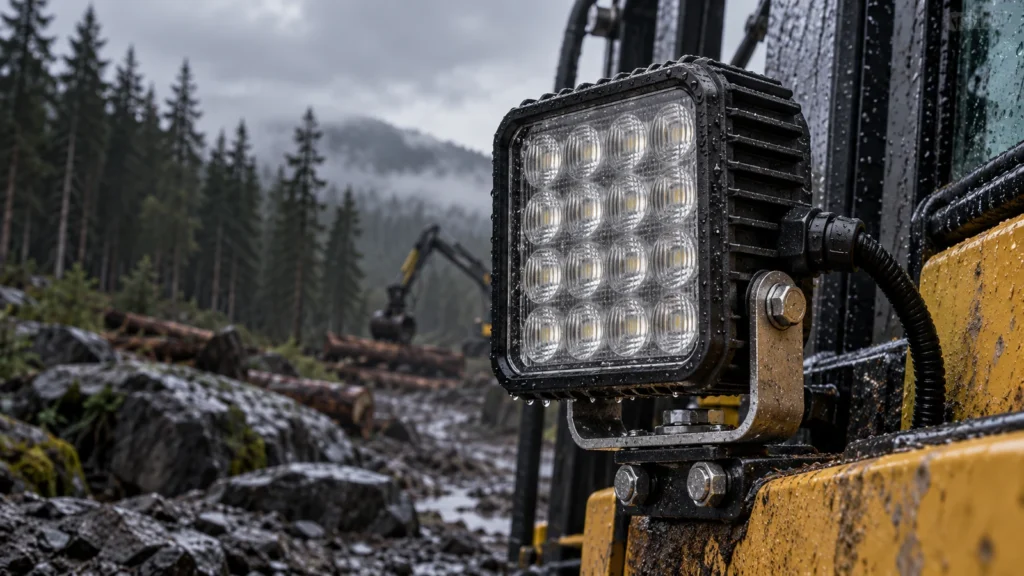
Illustrative rugged LED work light mounted on a forestry vehicle in wet off-road conditions

Extreme Durability in Off-Road Lighting: Thermal Shock, Vibration, and MIL-STD-810G Compliance

Introduction Auxiliary LED work lights on excavators, agricultural tractors, forestry machines, off-road trucks and other heavy-duty vehicles face more than ordinary road vibration. Engine excitation, uneven terrain, repeated impacts, rapid temperature changes and contaminated wash water can act on the same luminaire throughout its service life. A lamp that performs well during a short bench
Extreme Durability in Off-Road Lighting: Thermal Shock, Vibration, and MIL-STD-810G Compliance Read More »

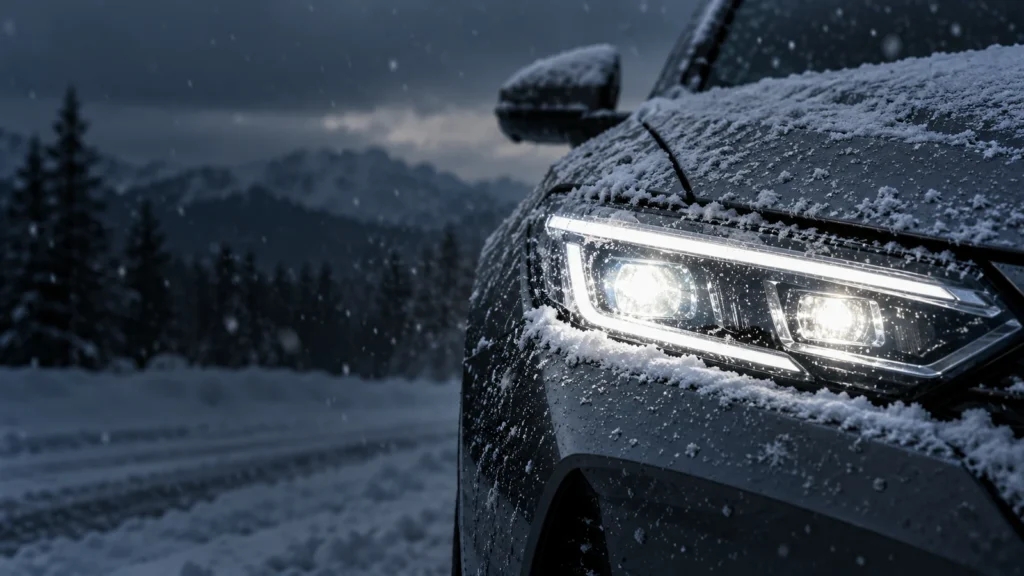
Unbranded car with LED headlights in freezing winterand deposits around the outer lens

LED Headlights in Freezing Winter: Resolving Lens Icing and Snow Accumulation

Introduction LED headlamps provide precise beam control and efficient illumination, but winter weather exposes a limitation that is easy to overlook in a warm-weather product demonstration. When heavy, wet snow, sleet or freezing rain strikes the front lens, the lamp may struggle to keep the optical surface clear. Snow or ice covering the lens can

LED Headlights in Freezing Winter: Resolving Lens Icing and Snow Accumulation Read More »

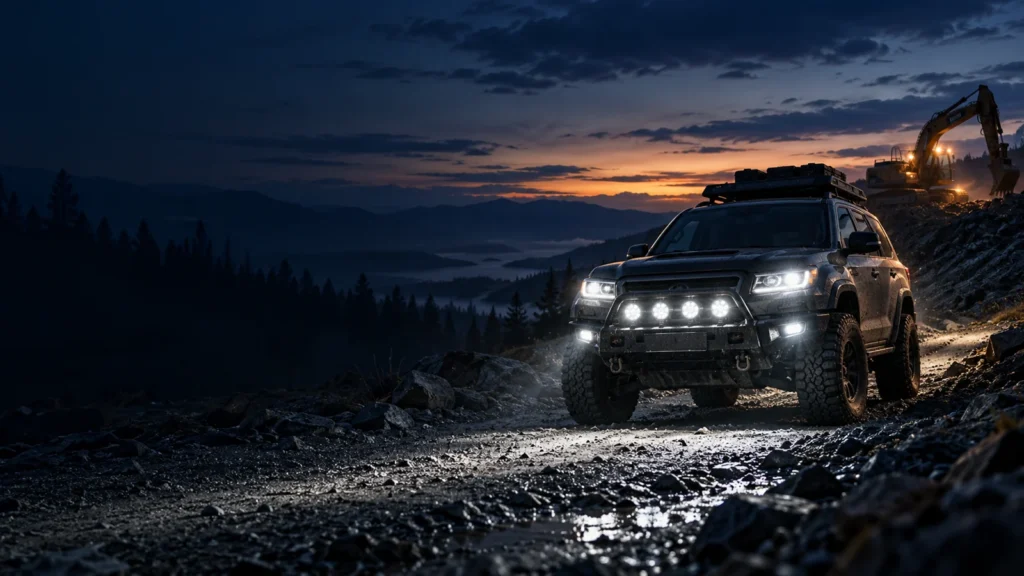
Concept scene of an off-road vehicle with auxiliary LED lights and heavy construction equipment at dusk

Off-Road & Heavy Duty Beam Patterns: Spot, Flood, and Combo Driving Light Optics

Introduction In off-road driving, agricultural operations, construction, mining, and forestry, effective illumination depends less on an advertised wattage or raw LED-chip lumen figure than on where the light is delivered. A lamp with ample output can still leave distant hazards underlit, create distracting foreground brightness, or spill unwanted glare outside the work zone. The central

Off-Road & Heavy Duty Beam Patterns: Spot, Flood, and Combo Driving Light Optics Read More »

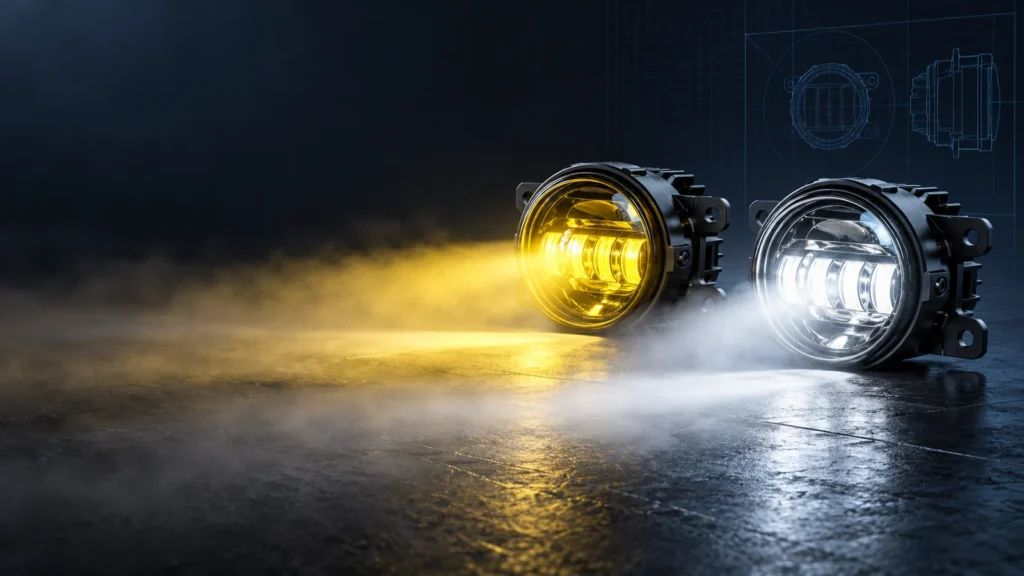
Concept illustration of dual color LED fog lights in alternative warm-yellow and cool-white modes

Dual-Color LED Fog Lamps: Optical Engineering, Circuit Switching, and Severe Weather Penetration

Introduction Modern automotive lighting must perform reliably across varied environments, from clear nighttime roads to heavy rainfall, coastal fog, snow, and wet mountain highways. For aftermarket brands and professional distributors, dual color LED fog lights offer two selectable lighting modes within one assembly. A typical system combines a cool-white mode around 6000K with a warm-white

Dual-Color LED Fog Lamps: Optical Engineering, Circuit Switching, and Severe Weather Penetration Read More »

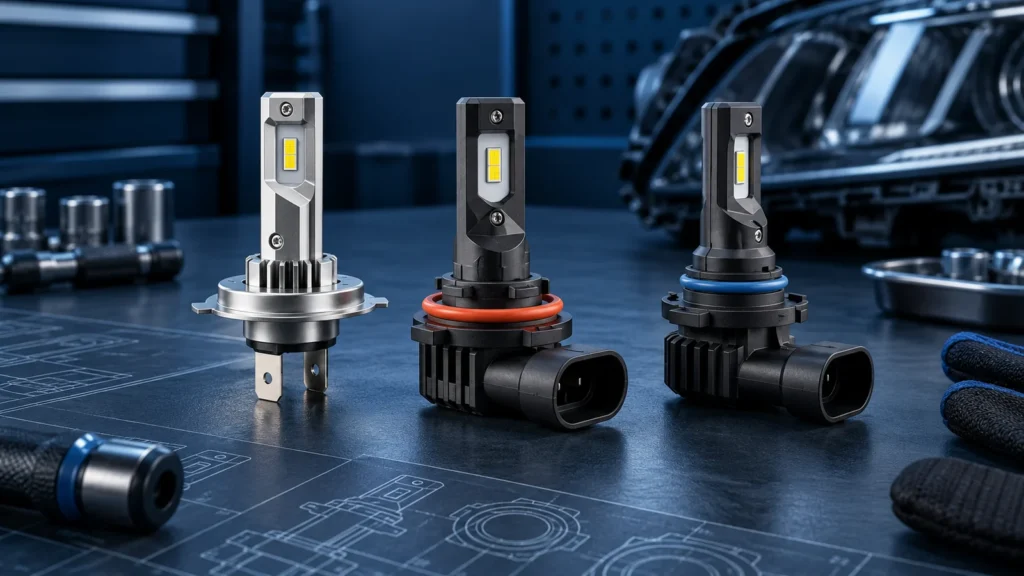
Concept illustration of H7, H11 and 9005 LED replacement bulb mounting families

H7 vs H11 vs 9005 LED Headlight Bulbs: Socket Fitment, Optical Alignment & B2B Selection Guide

Introduction Choosing the correct bulb category is one of the first—and most frequently misunderstood—steps in sourcing replacement LED headlight products. H7, H11 and 9005 (HB3) are familiar names in automotive parts catalogs, yet they do not share the same bulb bases, mechanical retention systems or typical vehicle applications. A bulb that looks similar in a

H7 vs H11 vs 9005 LED Headlight Bulbs: Socket Fitment, Optical Alignment & B2B Selection Guide Read More »

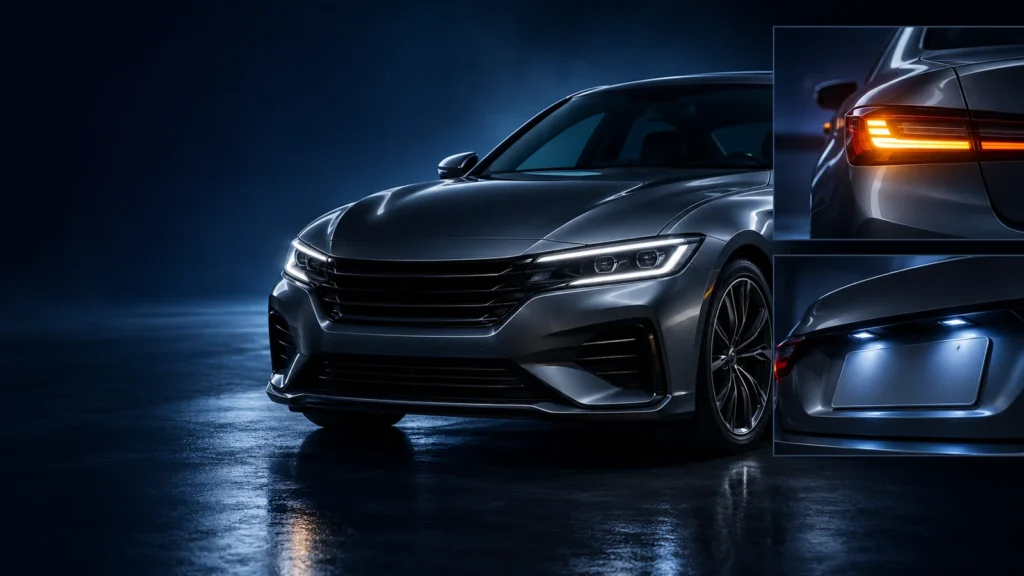
Conceptual automotive DRL, amber turn signal and rear license plate illumination on an unbranded vehicle

Modern Automotive Auxiliary LED Lighting: DRLs, License Plate Lights, and Signal Optics

Introduction LED headlights and projector modules attract most of the attention in vehicle lighting upgrades, but smaller lamps perform essential daily functions. Daytime running lights (DRLs) help make vehicles more conspicuous, license plate lamps illuminate the rear registration plate, and turn signals and side markers communicate vehicle presence or intended movement. For distributors and aftermarket

Modern Automotive Auxiliary LED Lighting: DRLs, License Plate Lights, and Signal Optics Read More »

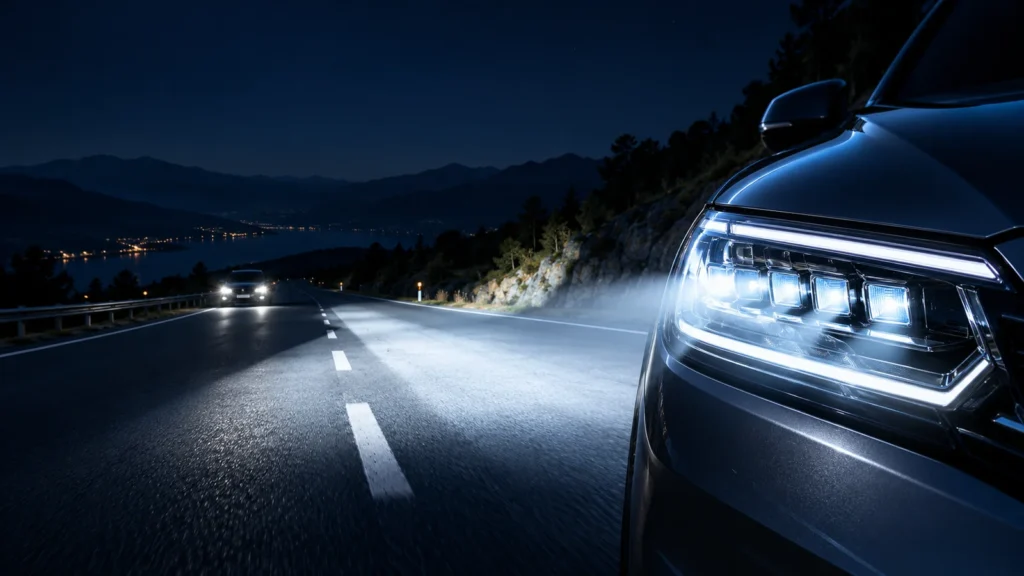
Matrix ADB headlights concept showing an unbranded headlamp and controlled nighttime road illumination

Matrix ADB (Adaptive Driving Beam) Technology: Optical Precision and Smart Micro-LED Arrays

Introduction Automotive headlamps are evolving from fixed-beam devices into electronically controlled systems that adapt their light distribution to the traffic scene. Matrix ADB headlights—systems using adaptive driving beam (ADB) technology—can reduce illumination in selected regions where other road users are detected while retaining useful forward lighting elsewhere. That capability depends on much more than the

Matrix ADB (Adaptive Driving Beam) Technology: Optical Precision and Smart Micro-LED Arrays Read More »

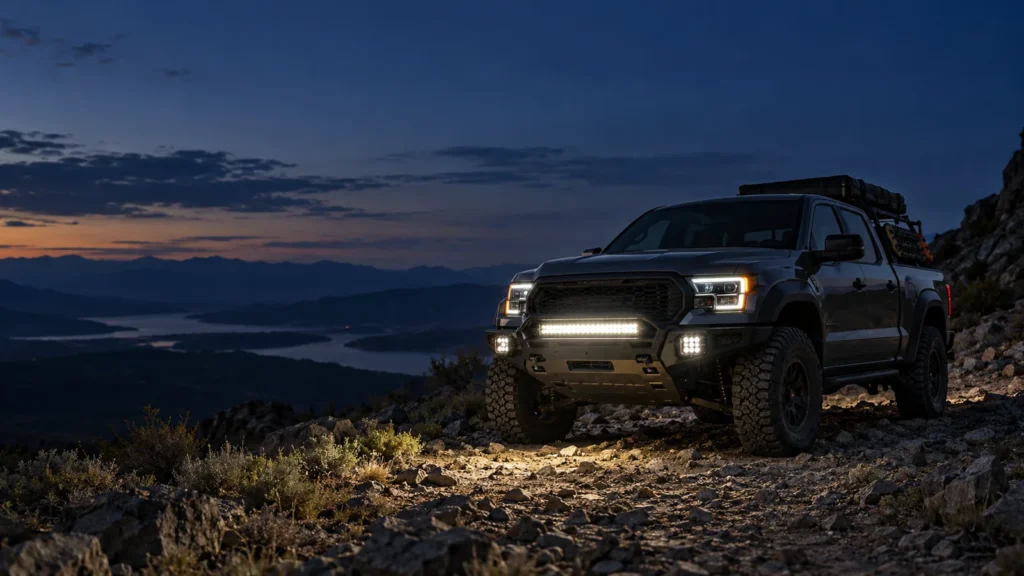
Off-road pickup equipped with an LED light bar and auxiliary pods on a rocky trail at dusk

Automotive Off-Road Lighting Equipment Market: Technical Trends & B2B Sourcing Guide

Introduction The automotive off-road lighting equipment market serves a diverse range of drivers and professional operators, from recreational 4×4 and overlanding enthusiasts to utility fleets, agricultural equipment and specialized work vehicles. LED light bars, auxiliary pods and ditch lights are often selected for different jobs: seeing farther down a trail, illuminating a broad working area

Automotive Off-Road Lighting Equipment Market: Technical Trends & B2B Sourcing Guide Read More »

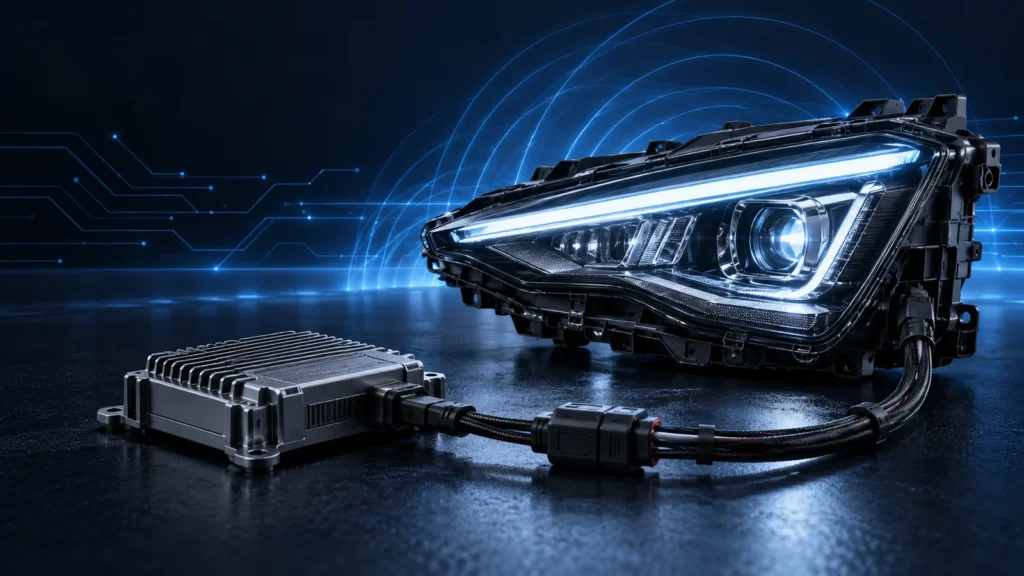
Automotive EMC LED lighting concept with an unbranded headlamp, driver controller and wiring harness

Automotive EMC & Electrical Architecture in LED Lighting: Radio Interference and Surge Protection

Introduction Automotive LED lighting is more than an optical system. Each headlight conversion bulb, fog lamp module or Bi-LED projector also contains an electronic driver that must operate reliably in a vehicle’s demanding electrical environment. For distributors and OEM/ODM buyers, electromagnetic compatibility (EMC) and power-supply robustness are therefore essential parts of product qualification—not optional details

Automotive EMC & Electrical Architecture in LED Lighting: Radio Interference and Surge Protection Read More »

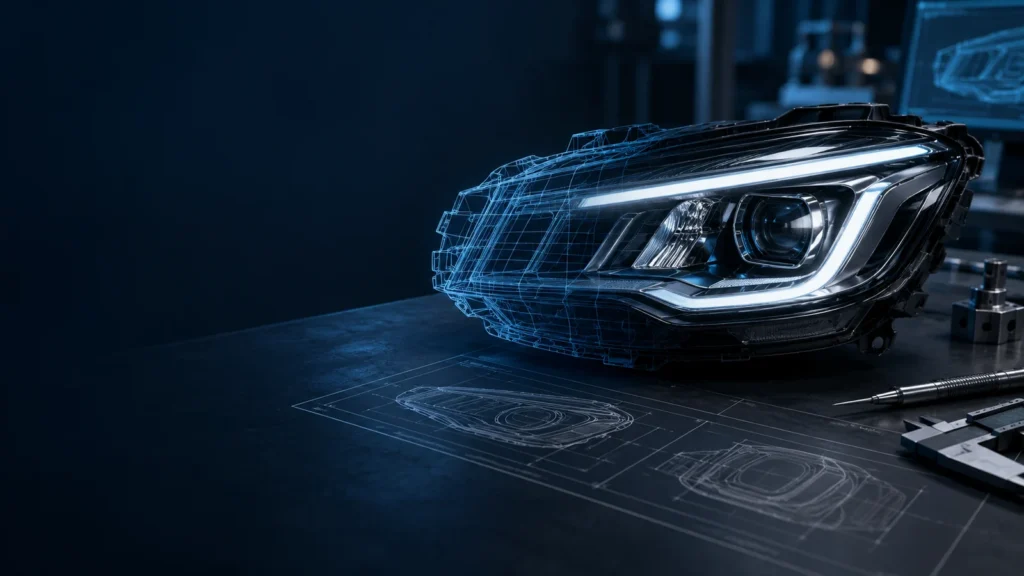
Conceptual OEM automotive lighting development with a headlamp transitioning from CAD wireframe to assembled form

OEM Automotive Lighting Development Process: From Concept to Mass Production

Introduction Developing a custom automotive lighting product connects engineering decisions with manufacturing controls and commercial commitments. A projector module, complete headlamp, fog lamp or auxiliary off-road light may need different optics, tooling and validation. A structured roadmap helps buyers identify gaps before those gaps become expensive production changes. This guide explains the OEM automotive lighting

OEM Automotive Lighting Development Process: From Concept to Mass Production Read More »